Wednesday 26th February, 7:30pm at the church hall
Join us for an interactive talk/discussion about some of the ideas from Hannah Ritchie’s book, “Not the End of the World”. If you are feeling hopeless in the face of environmental destruction, this might help!
Repair Cafe
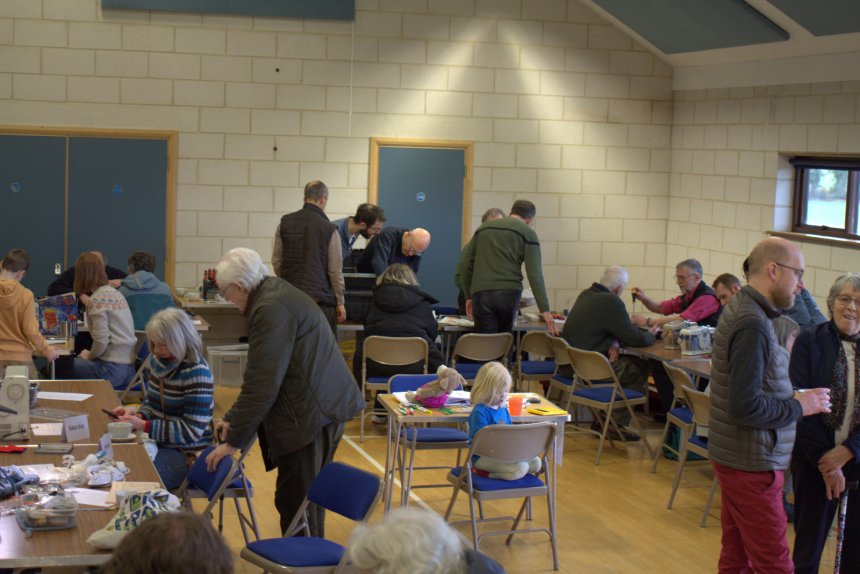
Thank you to everyone who supported the Repair Cafe on 8th February – read the report here.
Also coming up…
Solar Farm presentation – Monday 24th February, Oakington Pavilion, 7:30pm.
The developers of the proposed solar farm in Longstanton (on land near the former airfield road) will be giving a presentation on the plans. They are more than happy to take questions from members of the public after the presentation which will last 10-15 minutes.
Tree planting at the school, with the PSA – Saturday 8th March
Notes from SOW talk on 29/1/25, by Rachel Harrison from Foxton and Amanda Davis from Shepreth – a big thank you to them both!
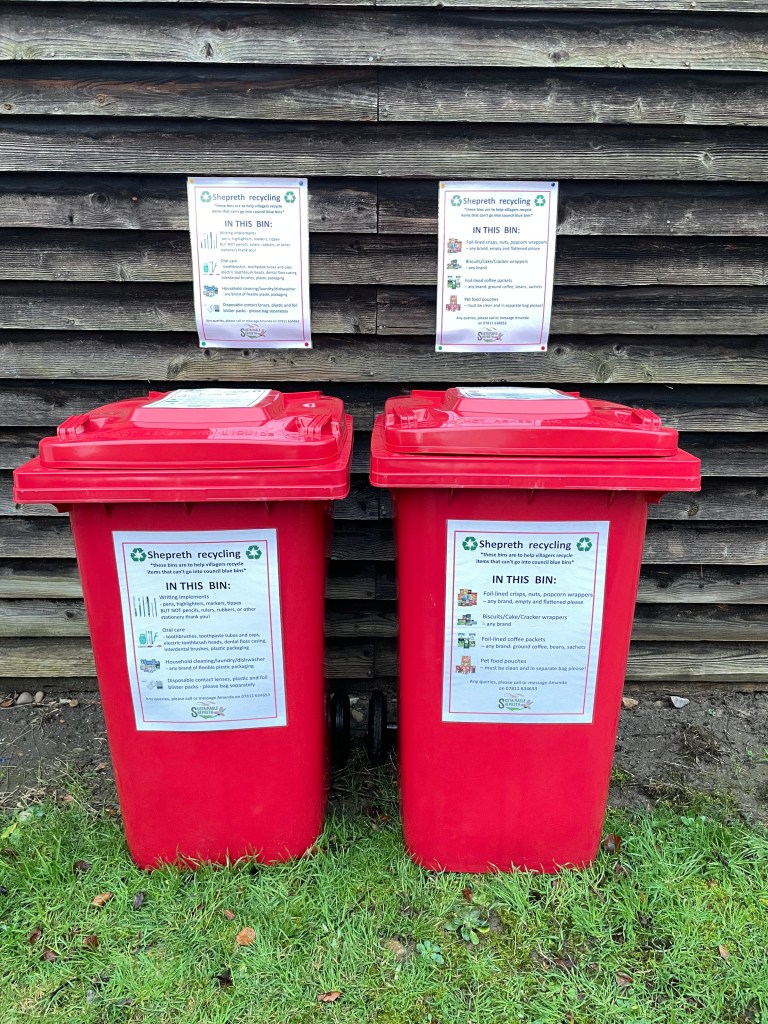
Rachel and Amanda have both set up recycling bins in their villages for hard-to-recycle items. Rachel began after picking up litter on her lockdown walks. Amanda used to take her recycling to Foxton, but when Sustainable Shepreth was set up she joined as recycling officer.
Lots of people want to recycle, but don’t know how or it’s too difficult, so are very pleased to have the easy-to-use recycling bins in their own villages. It also doesn’t make sense environmentally for lots of individuals to travel separately to distant recycling facilities.
South Cambridgeshire blue bins take more types of waste than in many parts of the country (so we can often ignore black “Don’t recycle” labels.) Any plastic that scrunches then springs back can go in the blue bin. (Not composite plastic/foil like crisp packets.)
Big supermarkets [and the Cottenham Co-op] take soft plastics that can’t go in the blue bin, such as crisp packets and cat food pouches. But not everyone can get to such a shop regularly.
One problem is that small things fall through recycling machinery – that’s why they ask you to put bottle tops back onto bottles. And dirty recycling contaminates the rest and makes it lower-value or impossible to recycle – that’s why you should rinse everything first.
Things are changing all the time – eg. food packaging changes to be more recyclable.
SCDC is soon to send its recycling, currently sorted at Waterbeach, to north London (not Dublin as advertised) where 5% more different things can be recycled, justifying the extra mileage, according to Jon Crisp the Recycling Officer.
Milton Recycling Centre is expanding the range of things it can take (eg now CDs and coffee pods.) But will be closed for refurb for 9 months from autumn 2025.
But the main message is Reduce then Reuse (then Repair) and only then Recycle – because it’s not easy and sometimes not possible to recycle (eg when soft plastics are sometimes incinerated.)
Terracycle
This is an organisation which links manufacturers with recycling facilities, and gets manufacturers to sponsor schemes for hard-to-recycle products (often composites eg plastic and foil.) More details on how products are recycled are on their website, and part of Terracycle’s work is to pressurise manufacturers to improve recyclability.
You can sign up on their website to be a public collection point. Terracycle collect for free so it’s quite easy to send off but you do have to have a minimum weight. (Terracycle also market their Zero Waste boxes which you do have to pay for, but that’s different.)
You are awarded points if you collect a sufficient quantity (eg 3kg – that’s a LOT of wrappers) which can be converted into money for charity. Rachel has raised £100 for Foxton Pre-school.
Schemes do change and close which means that you may no longer be able to collect something – eg in Foxton, pens and toothbrushes were collected but both of these have recently closed.
A collection point may not be within five miles of another of the same type, which can mean a long car journey for people. But not the way Rachel and Amanda have set it up – people in Foxton and Shepreth can put items in their village bins. (See below.)
The Foxton bins, identified by flowery stickers, are sited in the car park between the school and village hall, where many people walk by.
Rachel put together a project plan and presented to the Parish Council. She told them she would measure success and report back. She bought the (half-size) bins (the Council had run out of spare bins) but the PC paid for the fixing bracket.
The Shepreth bins are red and also in the middle of the village, behind the village hall.
Promoting it
Both when the scheme started and throughout, to keep interest up and to tell people about changes (in what you can recycle.)
Rachel has done three mailshots through all Foxton letterboxes, and posts on facebook every time there’s a change or she learns something new. Plus posters, and a regular advert in the parish magazine.
Amanda put together a stand for the recent Shepreth Eco Fair demonstrating what you could recycle in blue bins and Shepreth red bins, and Rachel has done engagement events at the primary school.
Work involved
Strongly recommend not doing it on your own – both Rachel and Amanda are currently one-man-bands, although Rachel had a helper during lockdown.
You do need storage space – Rachel uses her spare bedroom!
Every week they empty the bins into black bin bags and sort them (Rachel takes several bags to the bin and sorts on the spot.)
They are often caught out when schemes change and they are left with a heap of stuff they can no longer send off for recycling.
Sometimes people mistakenly or deliberately put litter in the village bins – a cup of coffee, half-eaten takeaways – that means sorting through and cleaning the contents of the entire bin. Rachel says she gets cross, but it’s better than those things littering the countryside!
Also often get things in the red bins/flowery bins that can go in the normal blue bin.
Hub and spoke
Rachel and Amanda operate on a hub and spoke model. They let neighbouring villages know about their schemes, and (largely) each has signed up with Terracycle for different items so they swap bags of recycling.
Networking is very important – with different villages and also with groups within the village.
Blister packs – a problem
They were particularly keen to collect medicine blister packs and had a phenomenal response (in Foxton the volunteers who deliver medicines to older people were recruited to pick up the empties.) But Terracycle only allows pharmacies to be collection points for blister packs (because they can safely dispose of any tablets left in them, and Superdrug in town takes them. However they only have a small bin and turned away the sackfuls from Foxton. So very sadly these can no longer be collected in the village schemes. Rachel suggested writing to MPs and putting pressure on the drugs manufacturers (some of them local) to provide more recycling facilities.
Recycling other specific things
There were lots of questions/discussion about specific items…
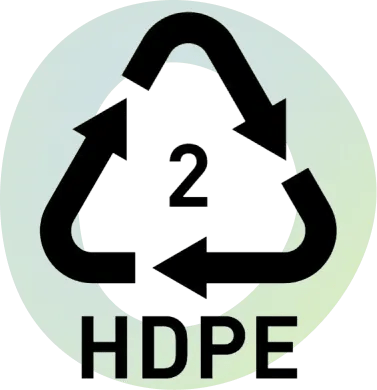
Toothpaste (or similar) tubes – many of these can now be recycled in the blue bin (wash first) – cut in half ad if no foil lining they can go in blue bin. (Look out for HDPE 2 recycling logo.)
Emily and Bee mentioned deposits on bottles – this is something which may come back in the future.
Bread bags – an example of something which has the “Can’t be recycled” logo on it but we can put in our blue bins.
Pringles – new pringle packets can now be recycled normally.
Cereal packet inner bags – can go in blue bin.
Blue paper towel roll – if put in with paper it contaminates it.
Bottle tops – composite metal/plastic ones can’t be recycled. The ones you lever off with a bottle opener can’t be recycled in blue bins because they are too small. James collects his up and takes to the Milton Recycling Centre metal bank.
Contact lenses and containers – can be recycled through Terracycle.
Coffee cups – apart from a few places (Costa) these can’t be recycled – they say compostable but our green bins can’t take them as they compost too slowly. Solution is a reusable coffee cup.
Bubble wrap – can go in the blue bin but Emmaus also glad of it for their online sales.
Textiles such as old pillows – can take to Dunelm.
Purses and raised beds
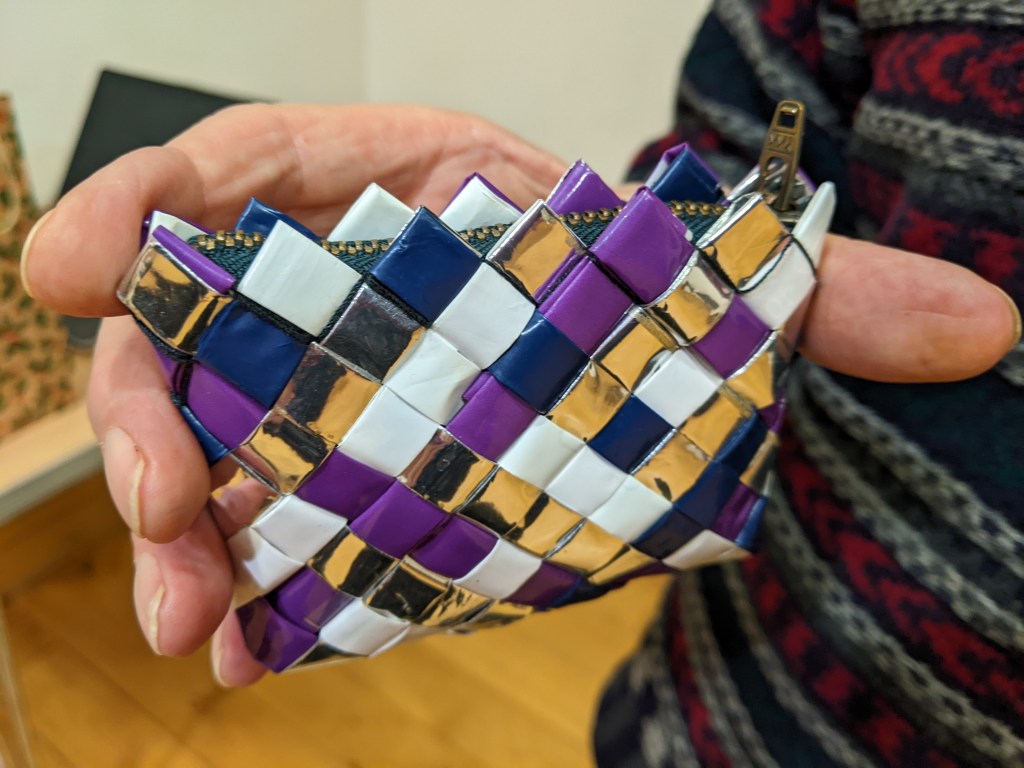
Rachel showed up purses she has made from plastic packaging! And Amanda is collecting packaging-filled plastic bottles to make raised beds with.
What next?
The audience included people from Landbeach, Northstowe and Rampton, and we agreed to keep in touch and see if we could organise something reciprocal just as Amanda and Rachel have done in their area.
SOW has some grey boxes and permission to put them by the church. However the items we were thinking of recycling – toothbrushes and pens – have just been discontinued by Terracycle, so need to discuss other possibilities.
Don’t miss Oakington & Westwick’s second annual Repair Cafe!
You can bring broken bikes and blunt blades, torn T-shirts and laggardly laptops, ailing appliances and malfunctioning machines … we will fit in as many repairs as we can!
Or just pop down to enjoy lunch or cake and the community ambience!
Blue Barrel and OWN will again be running the popular Orchard Wassail community event, 4–6pm on Saturday 25January 2025. Come down to the Jordans’ orchard on Arcadia Gardens for a fun traditional family celebration to encourage the apple trees to deliver a healthy harvest in the year ahead.
Dress warmly, bring a torch and something to make a lot of noise. Free entry, but donations welcome to cover costs. A welcome cup of free mulled cider on entrance and cash bar for further drinks. Mulled juice and a complimentary cup of warm soup will also be available.
Next SOW meeting
Wednesday 29 Jan – How to Recycle Eveything?! SOW meeting, 7:30pm at the Church Hall. Amanda and Rachel from Shepreth and Foxton will be explaining their villages’ terracycle schemes and giving us tips for starting ours.
Repair Cafe
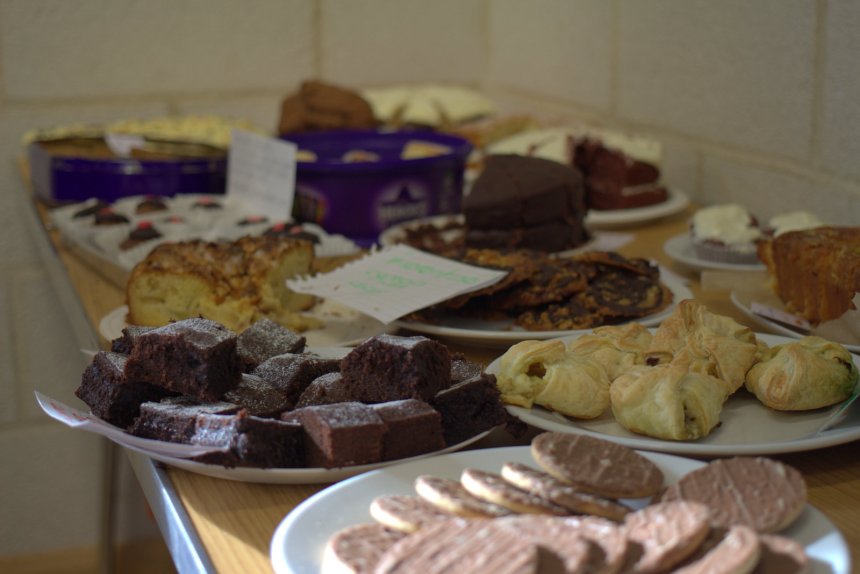
The next annual Oakington Repair Cafe will be held at the pavilion on Saturday 8th February, 11am – 2pm. More details on https://sustainableow.co.uk/repair-cafe/ including how to book a repair – it’s recommended to book repairs in advance to ensure they will be seen. Even if you aren’t bringing something to be repaired, you are very welcome to come to the cafe and enjoy lunch, cakes and the atmosphere!
We do need some help with:
Baking cakes and vegetarian savouries for the cafe
Serving, clearing tables and washing up at the cafe
Helping on the front desk to register repairees
Being a ‘runner’ to help communication between the front desk and the repairers
Wednesday 23rd October (NOTE not the last week of the month this time), 7pm (NOTE earlier time) at the Church Hall (as usual!)
We look forward to a relaxed evening together with a chance to chat about sustainability and other things as well!
If you can, please fill in the RSVP form to let us know how many are coming and very roughly what you might bring (just so we can do something about it if everyone plans to bring dessert!) If you are short of time then don’t feel you have to produce something amazing and home-made, we’d rather have you there than put you off coming. Just no meat or fish please.
There’ll be plates and cutlery for everyone but there isn’t a cooker in the servery so hot dishes will need to be brought while still warm.
Also coming up…
Sunday20 October – Oakington Eco-Home tours. Paul and Chris will be running special tours for SOW members of their home which is a case study in this year’s Eco Homes. Contact sustainableow@gmail.com if you would like to see first-hand how a 1960s terraced house can be retrofitted to a high standard. (See the Open Eco Homes website for all public tours and talks.)
Saturday26 October – community apple pressing days with Blue Barrel Cider. At the old stables on the High Street 12–4pm. The event on 12th was very enjoyable and sociable despite rainy weather, so do come to round two at at the end of the month.
Wednesday 27 November – SOW meeting: How to Have a Sustainable Christmas.
12 and 26 October – community apple pressing days with Blue Barrel Cider. At the old stables on the High Street 12–4pm. All welcome to this popular, family-friendly event – help wash and crush the apples, enjoy free refreshments, buy local cider. You can also help pick the apples at the Jordans’ orchard on Arcadia Gardens 10–12 noon on each of the two Saturdays.
Oakington Eco-Home tours. Paul and Chris will be running special tours for SOW members of their home which is a case study in this year’s Eco Homes. Members should contact SOW for more information. Limited places, booking essential. A great opportunity to see first-hand how a 1960s terraced house can be retrofitted to a high standard. See the Open Eco Homes website for all public tours and talks.
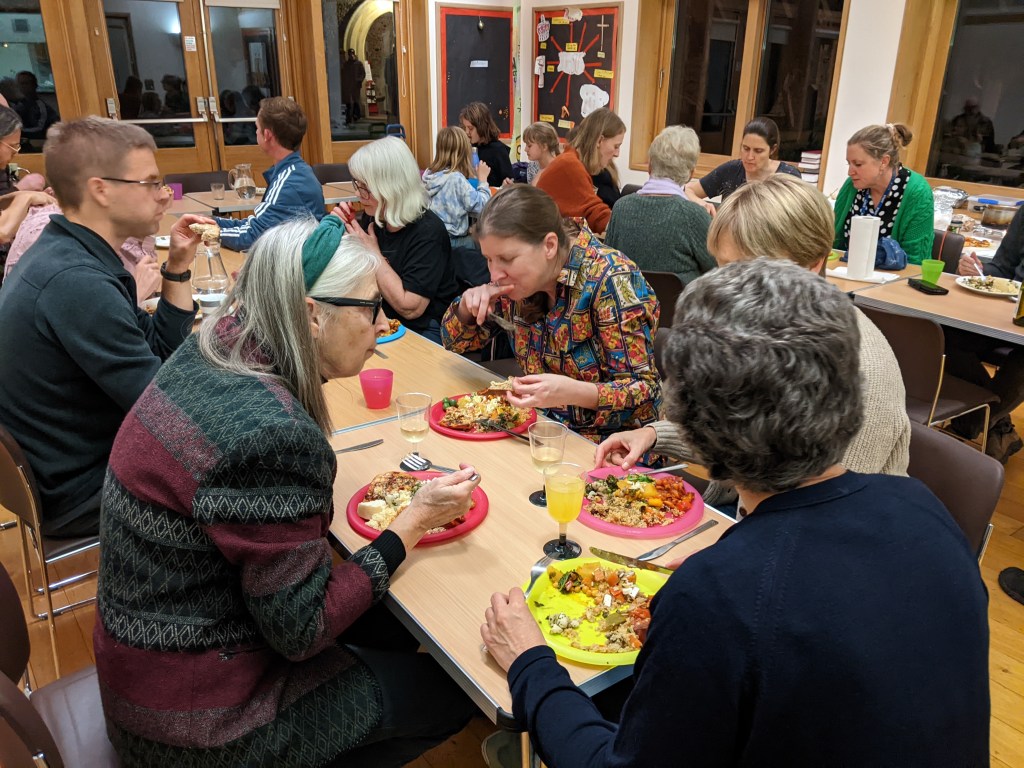
Wednesday 23 October (note NOT last Wednesday in the month), 7pm (note earlier time!) at the Church Hall. The long-planned Vegetarian Community Meal. Bring and share. It would be helpful to know numbers, so will send round an RSVP form.
Wednesday 27 November – SOW meeting: How to Have a Sustainable Christmas.
And in Histon: 7 October: Conversations about Gentle Travel, 2nd December: Conversations about a Greener Christmas, 2nd November: Swish (clothes swap) event. More details to come.
Notices
These included Nature Recovery project update, a discussion about some land under threat of development in Oakington which many members would like to see acquired for nature, a report from the Cambridge Carbon Footprint AGM and from Histon and Parents for Future. Please contact SOW for more information on any of these. The green library was open for loans!
We welcomed Clara and Yair who explained that WSC is a a not-for-profit social enterprise founded a year ago by people concerned and passionate about turning surface water flooding hazards into assets.
The problems
Climate change is bringing both increasingly heavy rainfalls and increasing drought. More building makes the situation worse because of more hard surfaces. The problems are pollution and property damage by flooding.
There are two kinds of system for rain run-off (on roads etc.) In combined systems sewage is mixed with rainfall, which dilutes the sewage but means that in very heavy rain treatment plants get overwhelmed, and overflow by design into rivers.
The other system takes run-off and releases it directly into rivers – also not good because road run-off contains oils, micro-plastics, bits of rubber, rubbish and other pollutants including forever chemicals which damage fish and invertebrates. Road run-off above a certain amount is supposed to be filtered but hardly ever is.
Even where more sustainable solutions are applied large-scale, there is a worry that attenuation ponds have not been maintained. Eg the ones along the M25 are now contaminated.
Ironically we also have a water scarcity problem. When water is drained away it isn’t supporting trees and life in the soil. We need to find ways of welcoming water, for plants and to fill the aquifer.
Solutions
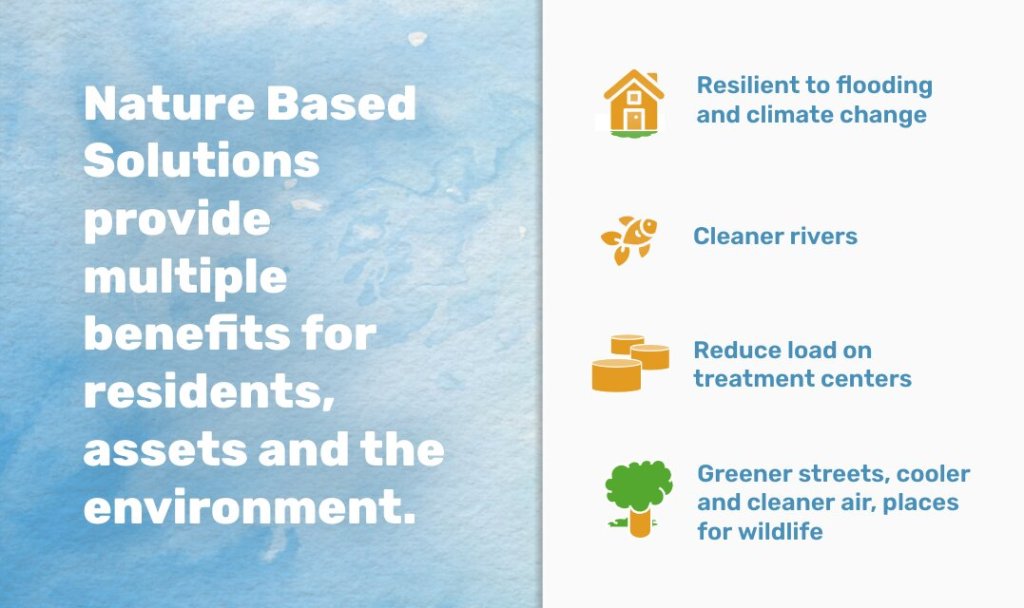
Pressure is being put onto water companies to invest in preventing sewage spills. However just putting in bigger pipes does not help for long – with climate-change rainfall, any size pipe will eventually be overwhelmed – and solves flooding problems only. Applying water sensitive principles, like putting stormwater into the ground instead of the drain, also gives cleaner rivers, nicer neighbourhoods and builds resilience to changing rainfall patterns.
The government is hopefully, belatedly, passing a law to demand sustainable drainage for any new development, but there is no requirement for retrofit, which costs a lot. So where do we start? With very local, simple solutions. Little interventions can nudge the bigger system and can make a big difference locally.
Principles
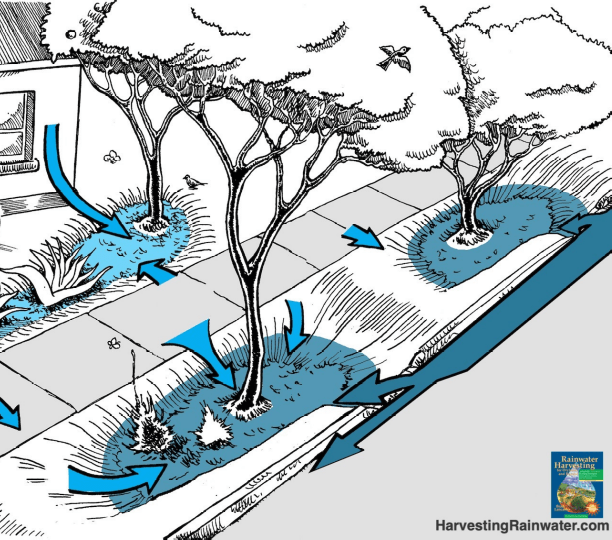
Put rain back into the ground as close as possible to where it falls
Get rid of hard surfaces, let water in
Lower the curve (like in Covid) – slow the flow – fill up butts and rain gardens. This is the catchment approach – on the large-scale, allow fields to flood before a village floods
Want water to go into soil and stay there, preventing later drought
Rain gardens
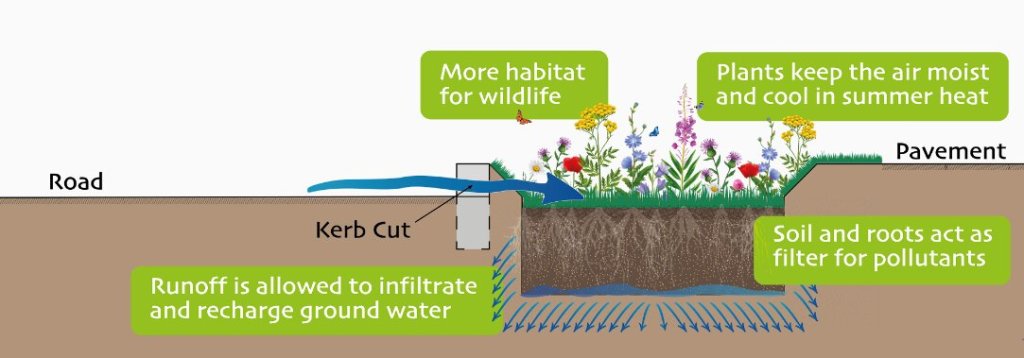
Earlier this year WSC did a pilot project in Fallowfield, Cambridge, a junction which is under water for half a day after very heavy rain. This was low cost, low effort – the kerb was cut in three places and the verge dug. Compost-rich soil was put into the holes, and neighbours helped plant perennials (which have bigger root systems and can survive drought) and sow wild flowers. Water fills up one pool at a time then runs on to fill the next. Compost makes the soil more absorbent :the soil’s capacity to hold moisture goes up exponentially with the amount of organic matter. Plant root systems bring micro-organisms which break down pollutants so the water is cleaner when it enters the water table.
It has worked well – after an hour or two there is now no standing water – and there has been a really good reaction from neighbours.
Rain planters
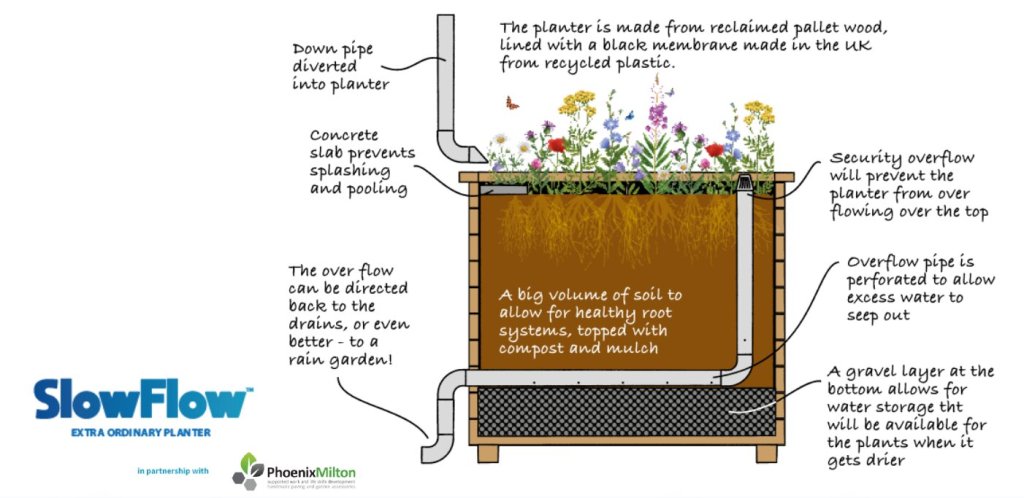
These are essentially rain gardens in a box. Lots of water enters but it only slowly drains away. The boxes are made (from recycled materials) by the brilliant Phoenix Trust in Milton. You can buy these from WSC for around £400 (which also supports Phoenix), a bit more if delivered and filled, or you can make them yourself. It’s a competitive price because WSC are not-for-profit and want to gather data on their use. They can be connected to water butts.
If the purpose is to “lower the curve” (stop sewers getting overwhelmed and causing flooding and sewage spills) empty them before the storm comes. The water then gets held back by the water butt, and doesn’t just go in the overflow and drain.
To do this, turn on your tap so it dribbles put slowly, You can use a piece of old gutter to direct the water from the tap into somewhere useful in your garden.
How and where to implement nature-based solutions
You need to know the area to know where the problems are. They can be very localised – eg a puddle which prevents people from crossing a road. Look for easy ways. You can do what you want on your own property. Cutting into the kerb needs Highways approval!
In Oakington & Westwick
We had a good discussion, including:
Celine described how in Meadow Farm Close they got rid of the concrete round the foot of the tree, and all the neighbours added plants.
David explained that when Bar Hill was built in the late 60s, attenuation ponds were included but have not been maintained so we get surface water run-off from there.
There are 19 wells in our village including 4 in the vicarage!
Westwick has septic tanks instead of mains drainage. They can be a big source of river pollution, but if you’re not seeing water come out the soakaway is probably working OK.
2014 floods – 53 houses had to have property-level protection but the flood overwhelmed them (or happened before training.) In some houses water came up through the floor anyway.
Trees are good but what to do if their roots are affecting pipes? If a tree has enough water that directs the roots down, and you can control the extent of roots by controlling the size of the canopy.
Asked about the moving of the sewage plant in Cambridge, Clara explained it’s motivated by releasing building land; it now has the capacity to serve the projected growth in the area.
The run-off from our community buildings (eg. pavilion) goes straight into drainage pipes, and Rachel suggested looking into more nature-based solutions for these. David said he’d put it on the Parish Council agenda.
David explained the PC has access to drainage system plans and that a rolling programme of maintenance has been established.
7:30pm, at the Church Hall, High Street, Oakington
We look forward to hearing from members of Water Sensitive Cambridge about their work in our area of scarce water and denuded habitats. Oakington & Westwick have suffered from flooding in the past, and Water Sensitive Cambridge have ideas about how to make best use of the precious resource of water including when there is too much of it!
Also coming up
Apple Pressing. 12-4pm Saturday 12 and Saturday 26 October. Blue Barrel Cider will be opening up their yard at the old stables on the High Street. All welcome to join in washing, crushing and pressing the locally grown apples. There will be free refreshments available at this family favourite event, along with the chance for adults to buy delicious local cider. If you really want to muck in and get the full experience, you’re welcome to come to the Jordans’ orchard on Arcadia Gardens to pick the apples in the morning 10-12 noon on each of the two Saturdays.
Wednesday 23 October – Bring and Share community vegetarian meal, church hall at 7pm – note earlier time. Please join the meal, bringing a food contribution to share (savoury or sweet, but no meat/fish please). If you have any home-grown veg left, then rustle up a stew and bring it along! Feel free to bring something to drink as well, and a minimal cash contribution towards rental of the venue will be appreciated.
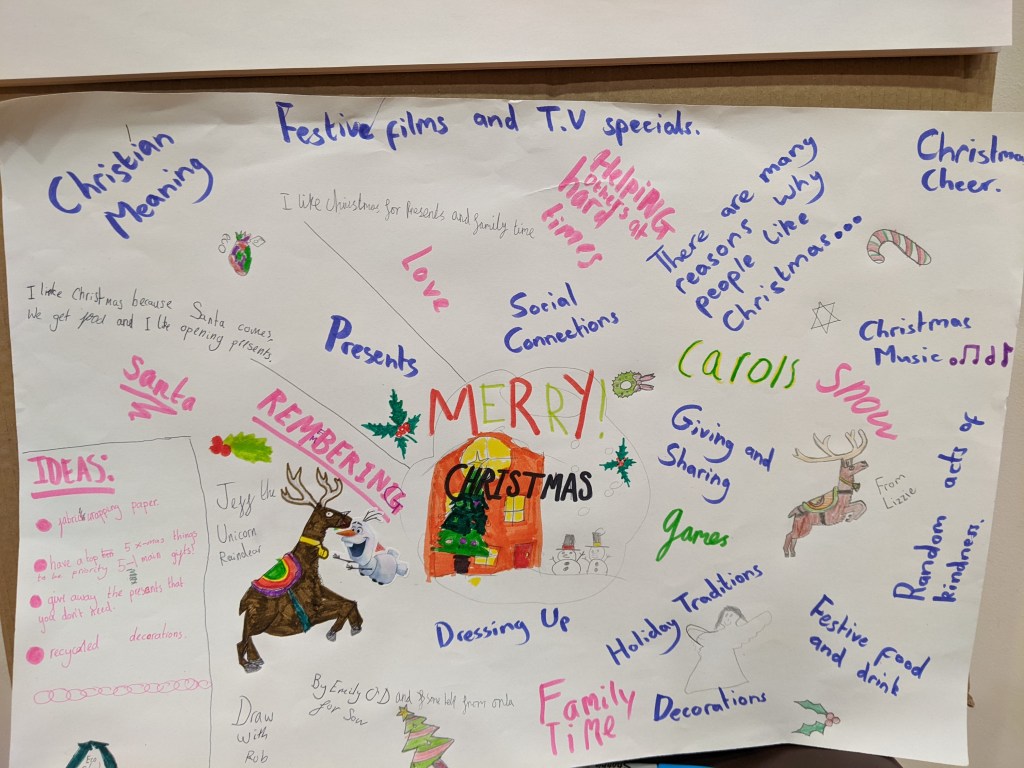
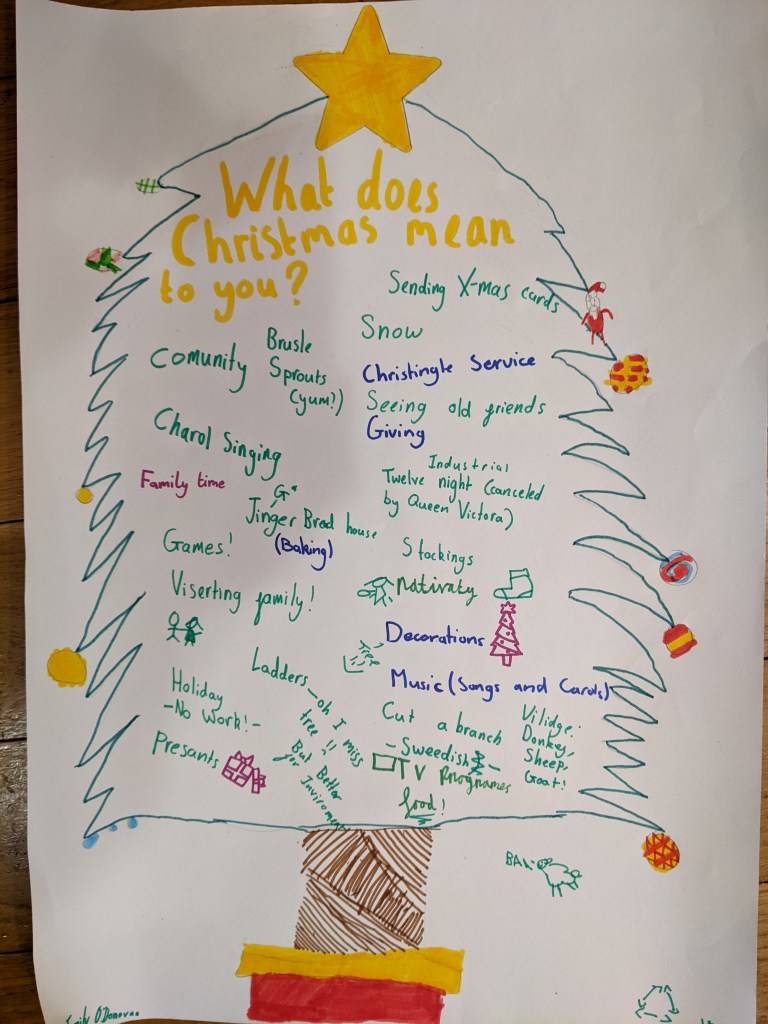
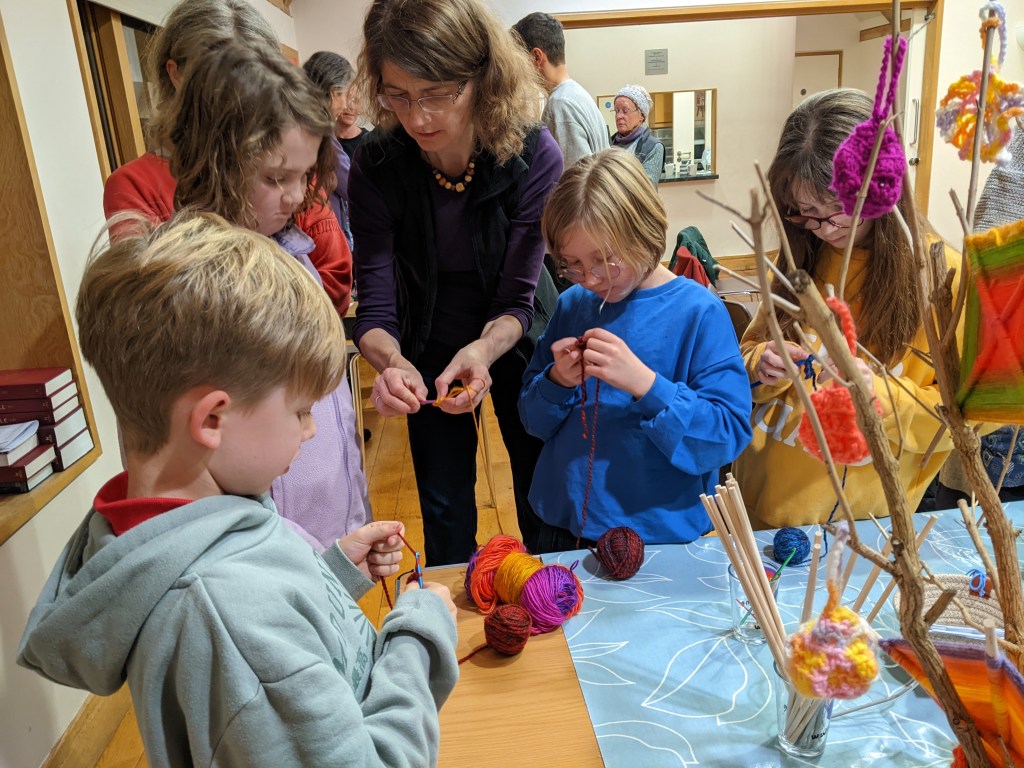
Wednesday 27 November – “How to have an Eco-Christmas”. 7:30pm at the church hall. Crafts and ideas for making the festive season more sustainable
Cambridge Open Eco Homes
See the Cambridge Carbon Footprint website to book up on in-person and online tours of local eco builds and retrofits and talks and workshops by experts. One of the eco homes is very local!!










 Sustainable Oakington and Westwick