Wreath making workshop

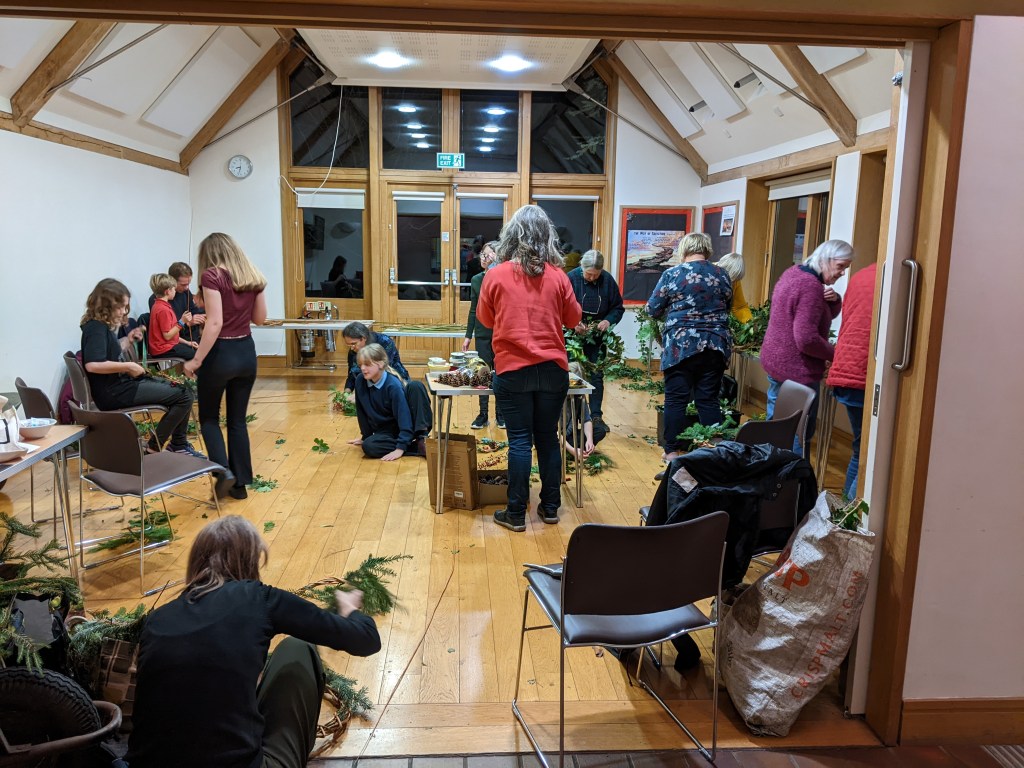
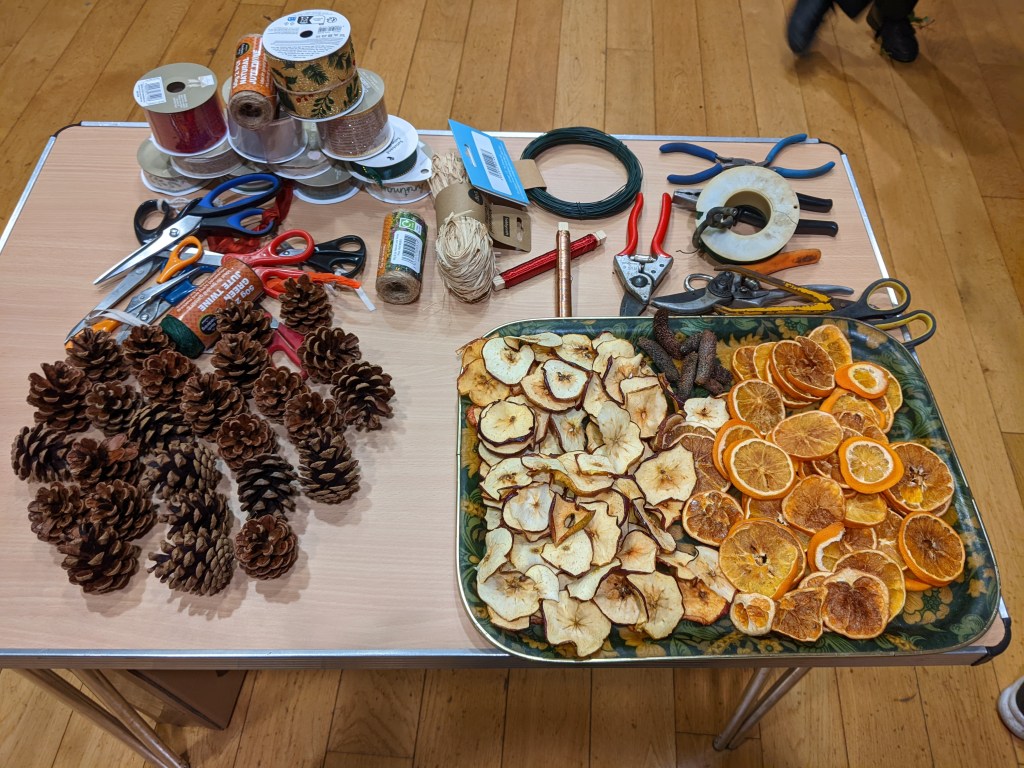
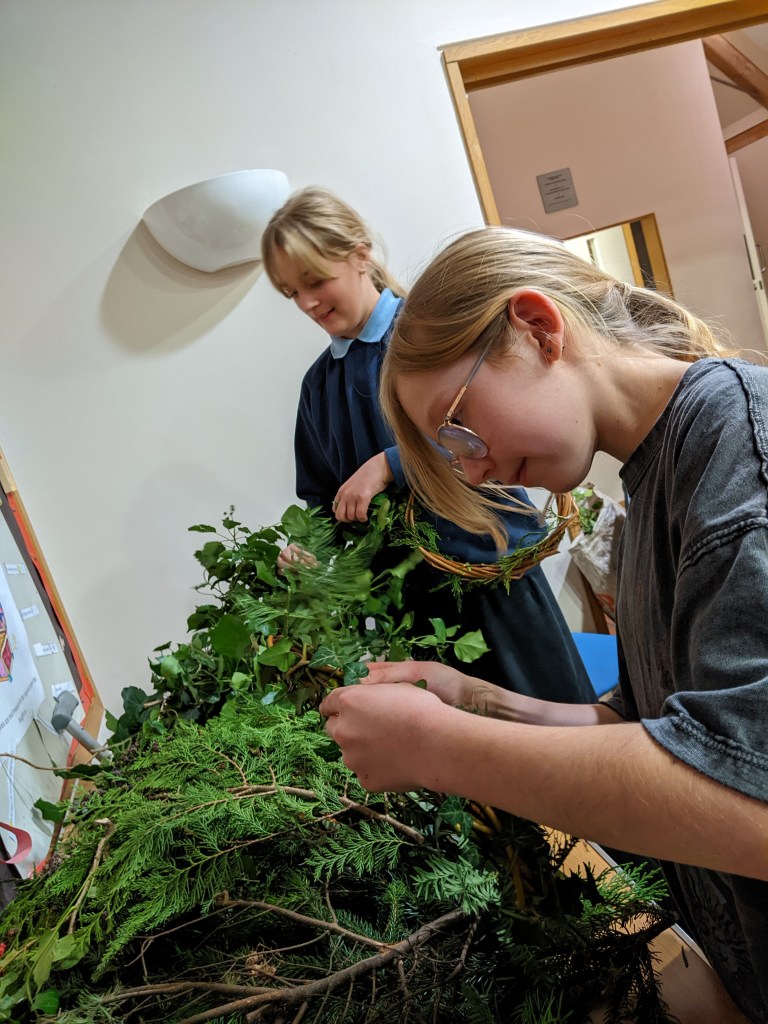
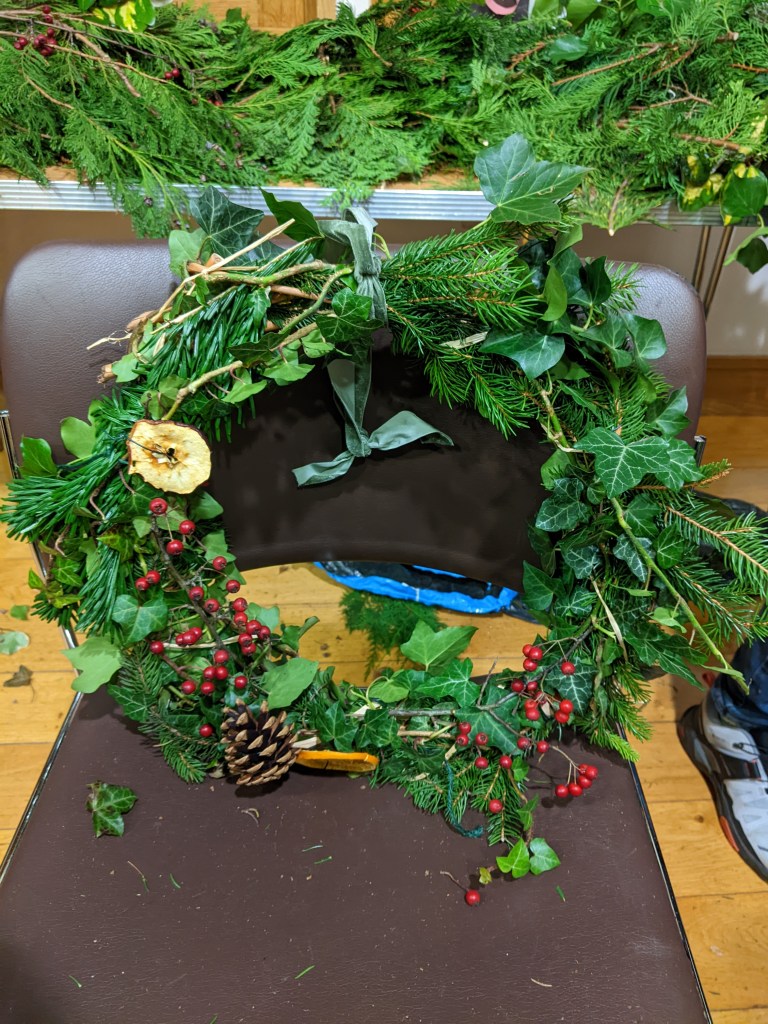
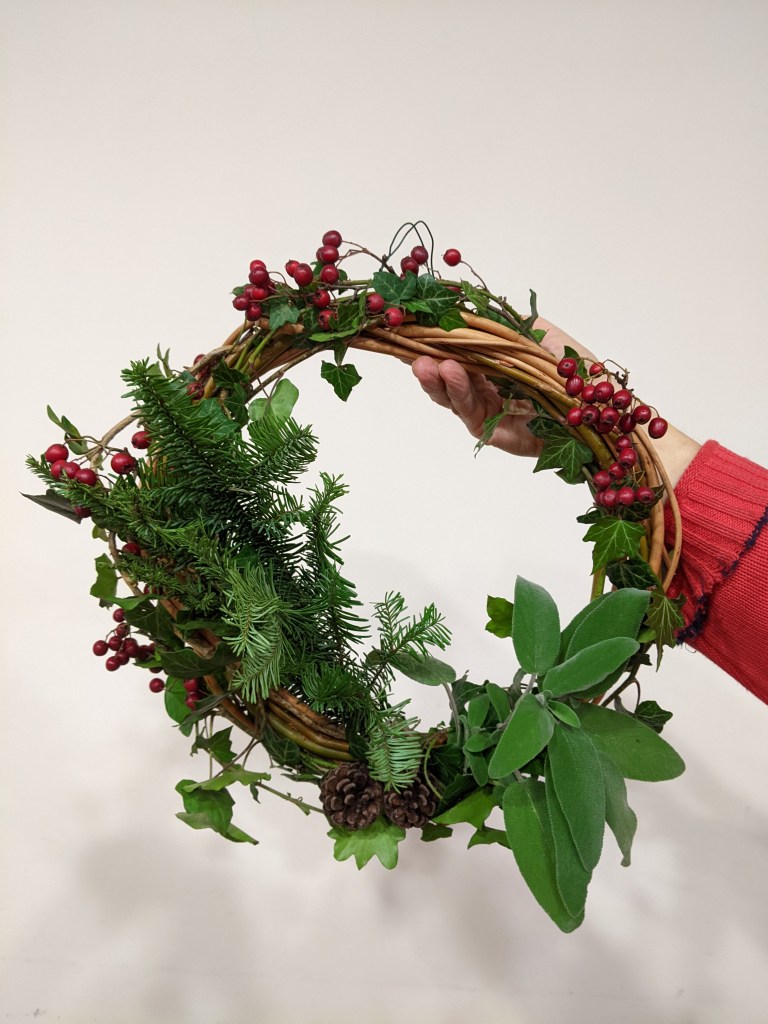
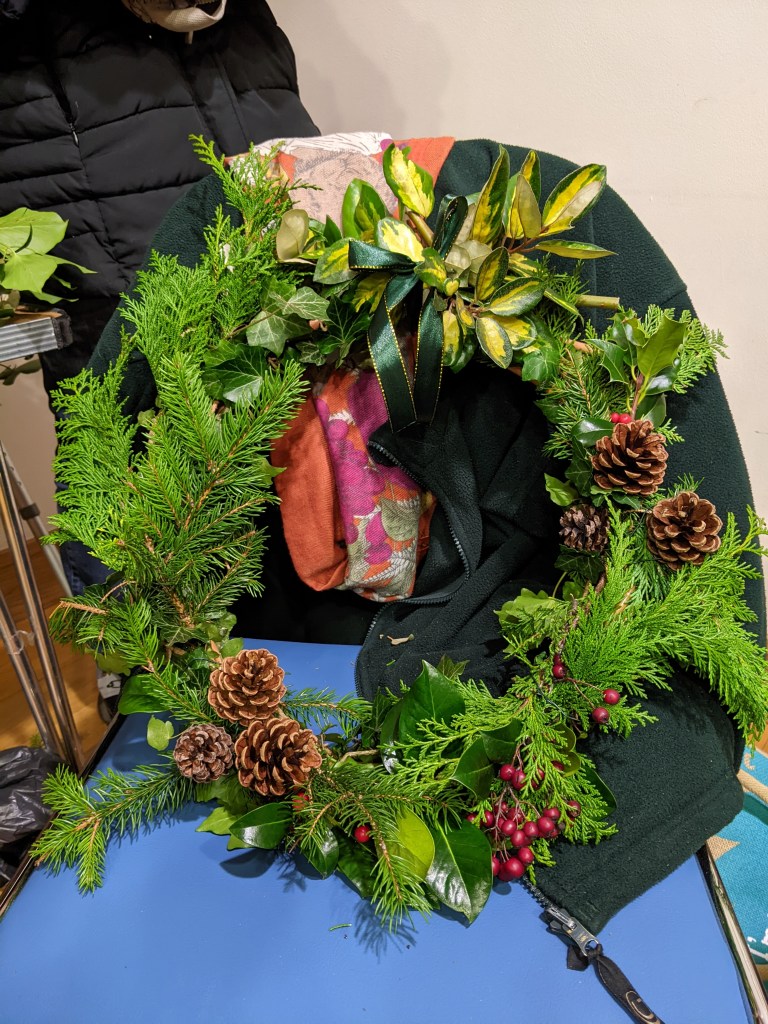
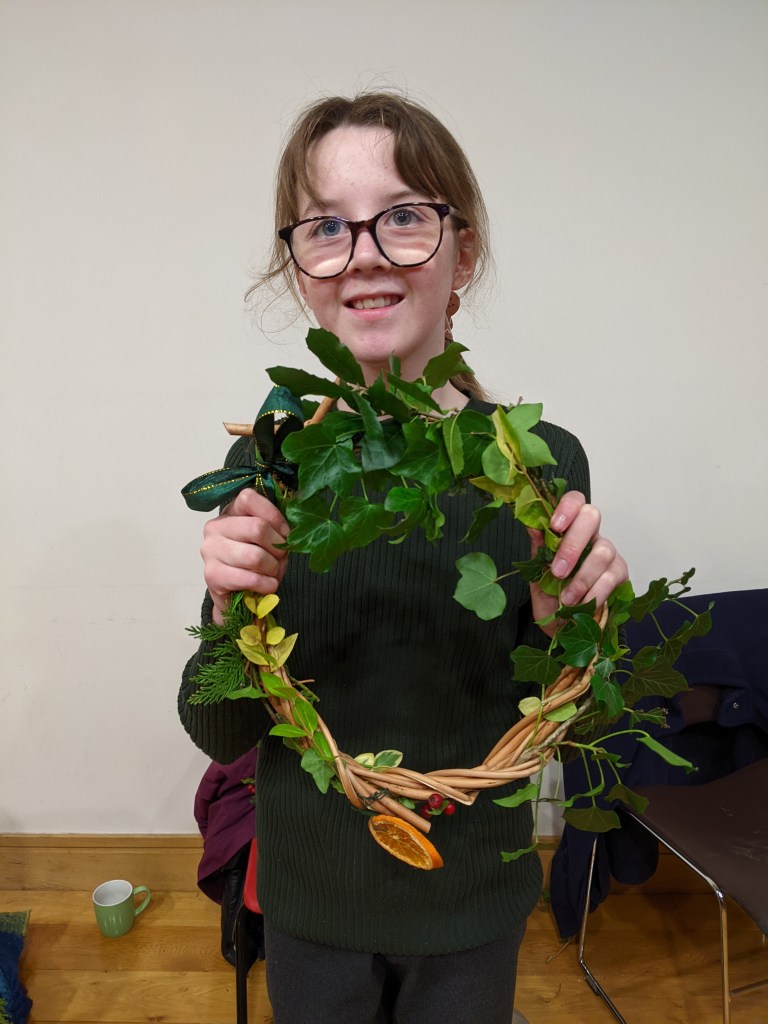
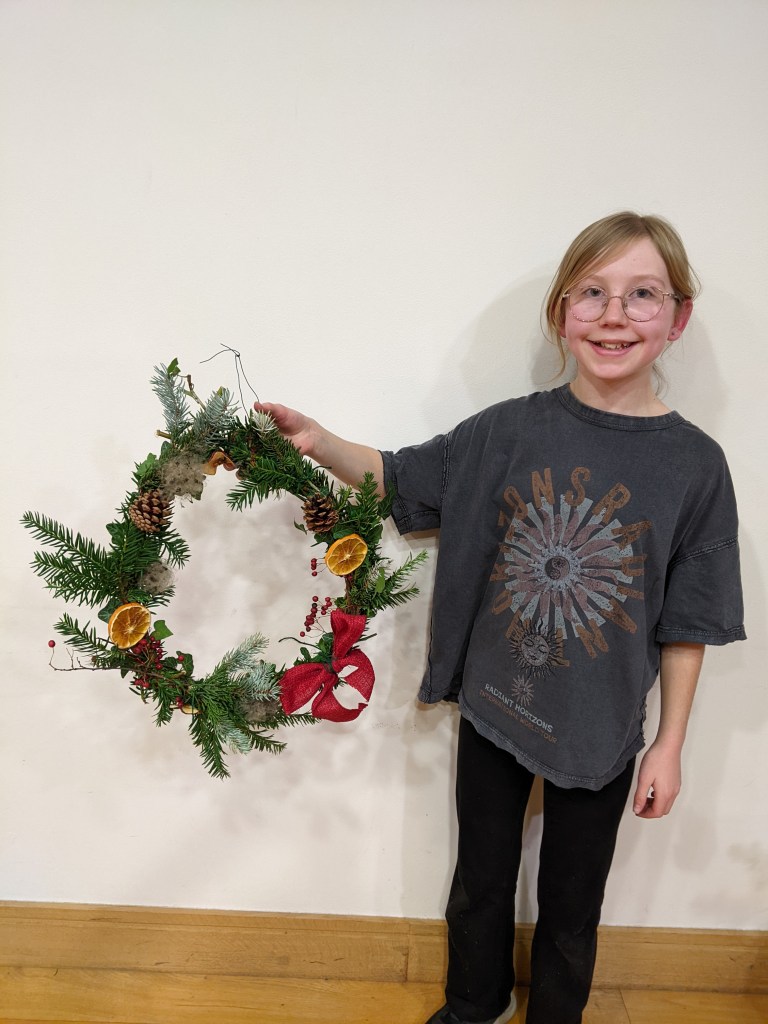
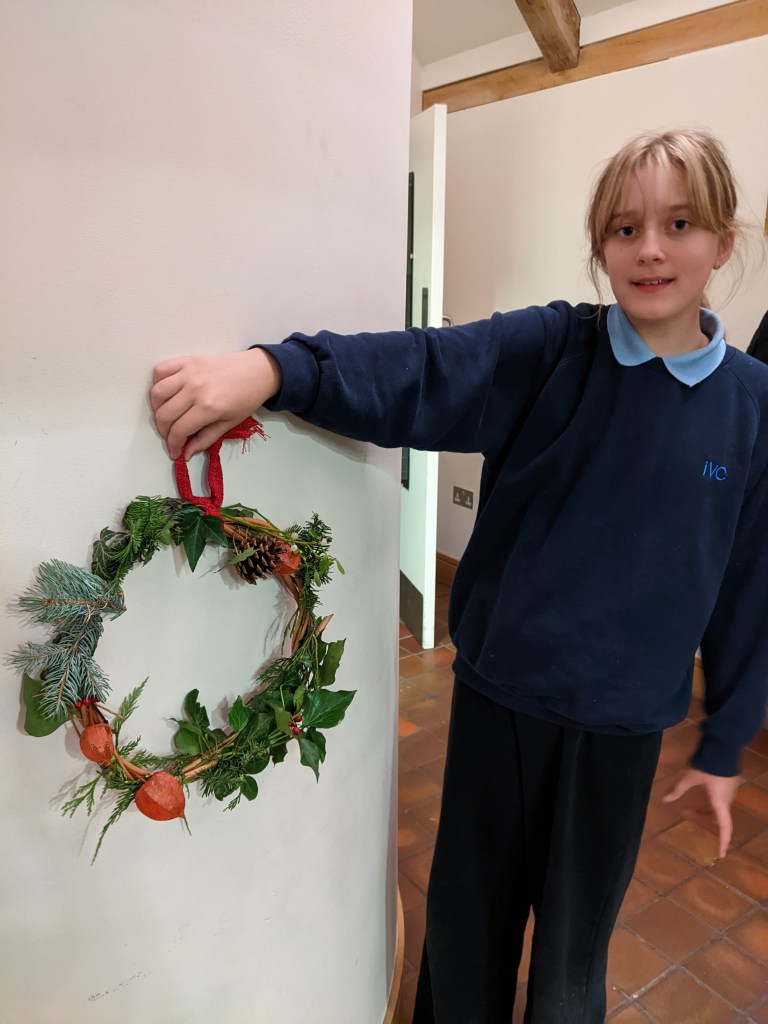
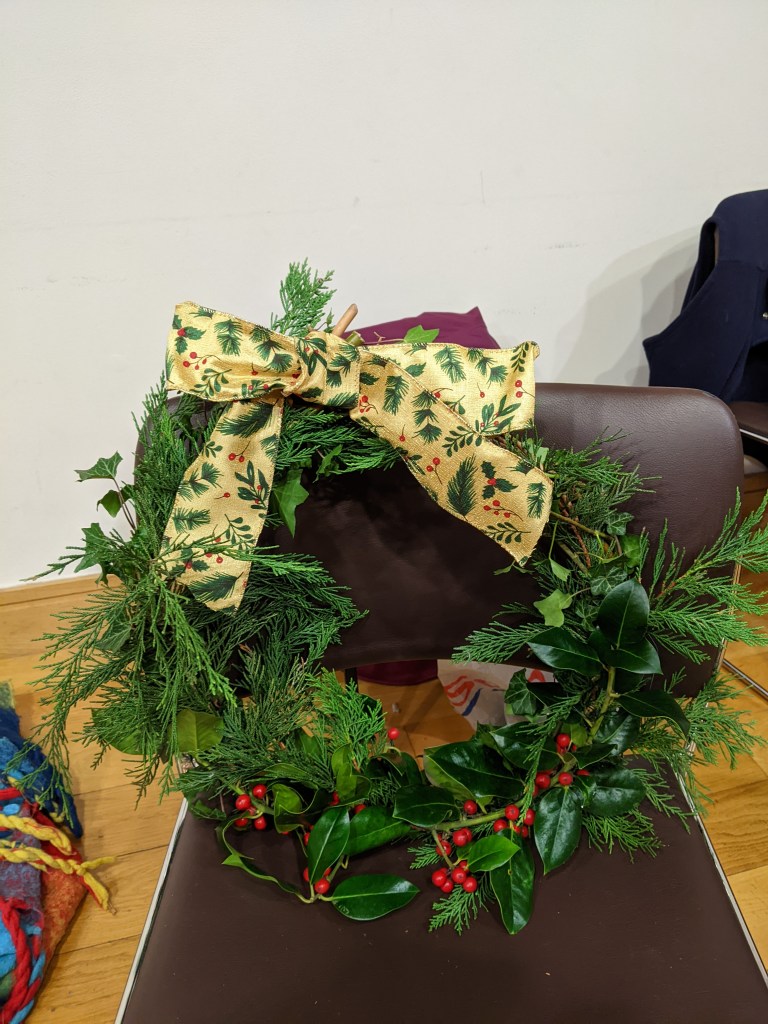
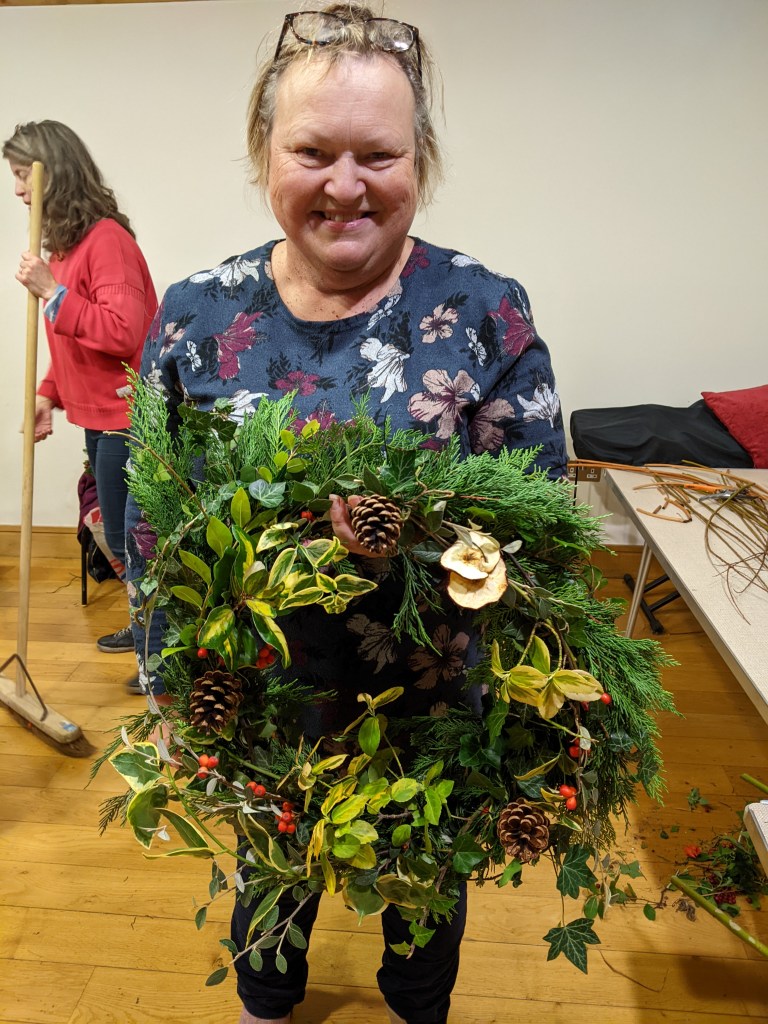
We had a very enjoyable evening creating Christmas wreaths from willow (including the heirloom Harrison willow) and greenery of all sorts!


Every wreath was different and they were all lovely – here are some of them!


We had a very enjoyable evening creating Christmas wreaths from willow (including the heirloom Harrison willow) and greenery of all sorts!


Every wreath was different and they were all lovely – here are some of them!


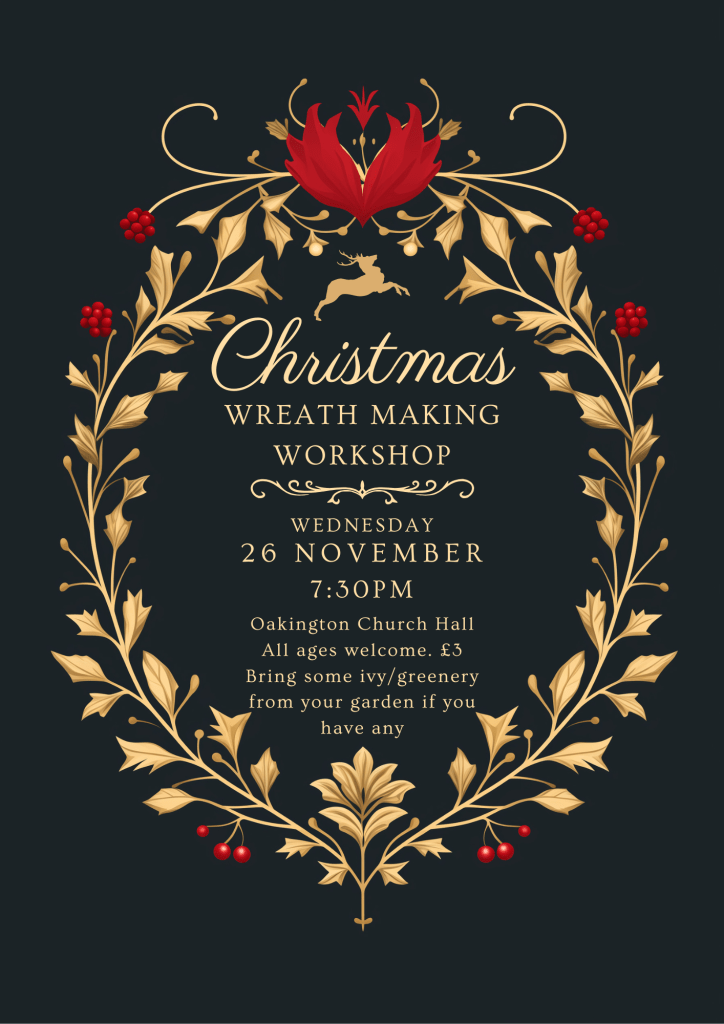
SOW’s final session of the year will be a chance to learn how to create a Christmas wreath, led by our own Ems Jordan.
All ages welcome! Please bring a small donation of £3 to cover materials and hall hire, and if you have ivy or other greenery in your garden, please bring some along!


If you haven’t already done so, send answers/comments to the Council climate/nature survey by 9th November. Even if you don’t have time to fill it all in, it would be good for them to hear from as many people as possible. https://engage.cambridge.gov.uk/en-GB/projects/climate-and-nature-strategies
(“The councils have set out transformative visions for a region where nature thrives, the air and rivers are clean, communities are resilient to the changing climate, and future generations can flourish. They are developing new strategies to take this work forwards and want local people and organisations to have their say.”)
Wednesday 26th November, 7:30pm at Oakington church hall

SOW’s final session of the year will be a chance to learn how to create a Christmas wreath, led by our own Ems Jordan. All welcome! Please bring a small donation (eg £3) to cover materials and hall hire.
Don’t forget it’s Apple Day on Saturday 1st November!

Come along to the Cidery at 54 High Street between 12 and 4pm. Everyone is invited to join in washing, crushing and pressing locally-grown apples, or to just watch and chat! There will be free refreshments available at this family-friendly event, along with the chance for adults to buy delicious local cider.
Help is also needed picking the apples (off the ground!) – come to the Jordans’ orchard on Arcadia Gardens, 10–11am on Saturday.
Organised by Blue Barrel Cider, Sustainable Oakington & Westwick and Oakington & Westwick Neighbours.
Everyone is very welcome to join in our bring and share vegetarian supper on Wednesday 22nd October, 7pm at the church hall (note earlier time than usual.)
This was a lovely, friendly (and delicious) event last year so we hope to see you!
If you can, please RSVP on https://forms.gle/N5D7n4qTKPieYN886
Don’t worry if you don’t know what you might bring, just guess if it will be sweet or savoury, and you don’t have to cook something yourself, just bring along something to add to the buffet!

Thank you to the 18 people who helped plant bulbs on Saturday 18th October, especially to the nine younger people including Beavers and Squirrels for whom it will count towards badges!

We planted bulbs in six areas, at the junction of Queensway and Water Lane, at the junction of Holme Close and Water Lane, by the crossroads and alongside the pub on Coles Lane.

The bulbs were chosen to be pretty, pollinator-friendly and/or to naturalise and spread in the grass: crocuses, daffodils, tulips and wild tulips, English bluebells, and two types of allium.

These areas will be left uncut next year until September, to benefit pollinators and other wildlife.

We hope the bulbs will grow! Thank you to the Parish Council for paying for them, and to the EAG and PSA for helping to organise.

Some dates to put in your calendar.

Everyone is invited to join in washing, crushing and pressing locally-grown apples, or to just watch and chat! Family-friendly, free refreshments, and local cider available to buy.
You can also come and help pick the apples at the Jordans’ orchard on Arcadia Gardens, 10–11am.
Organised by Blue Barrel Cider, Sustainable Oakington & Westwick and Oakington & Westwick Neighbours.
Jointly organised with the PSA. Families welcome. Bring a trowel or bulb planter! (NB still waiting for Council permission to confirm this can go ahead.)
NOTE: EARLIER TIME! And not the last Wednesday in the month!
A sociable bring and share community meal open to all. We’ll be sending round an “RSVP” link.
Don’t feel you have to produce something amazing and home-made, just no meat or fish please. There’ll be plates and cutlery for everyone but there isn’t a cooker in the servery so hot dishes will need to be brought while still warm.
Another chance to come along to an apple day!
Hardwick and Dry Drayton Eco Festival, Saturday 27 September, 10:30-4pm, The Cabin in Hardwick. https://stmaryshardwick.org.uk/eco/
Wildlife Festival, Sunday 12 October, 2-4pm, Girton Pavilion. https://www.girton-cambs.org.uk/girton-parish-council-2/local-nature-recovery-plan/ We are hoping to have a stall there.
Cambridge 25 exhibition at the pavilion on Monday 13 October, 6:30pm-7:30pm. (TBC) Find out about this major development proposed in Oakington & Westwick parish. Comments made will inform the planning application. https://cambridge25.com/ (Note the public consultation response deadline is Monday 29 September.)
Open Eco Homes, tours and talks 26 October–23 November, online and in-person. Visit local homes equipped with heat pumps and other low carbon technologies and hear directly from homeowners about their journey towards increased comfort, savings, and sustainability. Gain practical advice from experts on working with professionals, cutting energy use, saving water, installing solar PV, and making affordable DIY improvements.
FREE; advance booking required. Full details and booking: https://cambridgecarbonfootprint.org/what-we-do/open-eco-homes/
Just a few highlights from Leo’s fascinating talk which prompted lots of questions!
Beekeeping is a symbiotic relationship – you get honey but the bees are also helped.
In summer there can be 60,000 bees in the hive – most bees die off in autumn so in winter it’s just a cluster the size of a fist. A hive includes a brood box covered by a queen excluder and then a honey box with another one or two added through the summer. Apart from the hive other equipment needed includes a veil and gloves, a queen trap, and a smoker. You don’t need much.

In a natural environment there are two honey flows, one at blossom time and one just after midsummer. With garden flowers all year the honey flow is more continuous. You might get 15kg honey in spring, 60kg over summer. You take it at the end of August so the bees have enough time to build up honey to overwinter. Sometimes wasps get in and steal all the honey first.
Grubs are fed on pollen (high protein), then pupate, and then the young bees move onto honey. Worker bees have different jobs throughout their lives. First they act as nurses, looking after the grubs; then as guards, then as foragers. Bees forage for four things: pollen, nectar, water, and propolis – bee glue – eg. from tree buds.
Drones don’t seem to do much – but perhaps there’s more going on than we think? Once a summer they join drones from other hives in a drone congregation zone to which the queens fly off to mate.
The queen lays eggs constantly for 2-3 years – 100,000 eggs from that one mating flight. The old queen must fly off (swarming) before the new queen hatches. This year Leo has been experimenting with encouraging the swarms into nearby boxes.

The native honeybee is small and black and only found in remote places like the Hebrides. All the honeybees you see are hybridised with striped Italian bees brought here in the 50s because they had a gentler nature and were more productive. So they are effectively domesticated.
You can help honeybees by planting flowers and flowering shrubs and trees. Bumblebees and solitary bees don’t have humans helping them so to help them it’s even more important to provide habitat to live in.
There are 24 different types of bumblebees; some look very similar. Only the queen survives the winter so these are the first you see in spring. They like old mouseholes to live in, but also grassy tussocks. Bits of turf stacked up somewhere sunny are useful to them. Bumblebee nests bought online are no use. Bumblebees also make honey but unlike honeybees don’t die if they sting.
There are lots of species of solitary bees. They don’t feed their grubs. Ivy bees are emerging aruond now – have a very short lifecycle. Sawn-up bamboo is very useful to them and they use such “hotel;s” all year round.

Come along on Wednesday 24th September for a talk on “Bees and Bee-keeping” by our own Leo Jordan. 7:30pm at the Church Hall.
Free, but a donation of a quid or two towards the hall hire would be appreciated!
We have a community tool share kept behind Crossways House on the crossroads, but at the moment nobody can use it because there is no-one to act as a point of contact, arranging to unlock it when someone needs to borrow something. If you could help with this please contact SOW. It’s not a very time-consuming role, and would particularly suit someone who enjoys DIY or who knows their way around tools!