
Food Waste – Food Poverty?
Notes from the SOW meeting on 11 March 2026
We welcomed Kordula and Rachel from Harston, and Maria and Stefania from Northstowe, to tell us about their very impressive projects aimed at preventing food waste and helping those in food poverty.
Harston Community Food Hub
This community led initiative began during COVID to meet an increasing need for emergency food relief. It was set up with the help of Cambridge Sustainable Food (CSF) and is one of a network of food banks jigsawing across South Cambridgeshire. It is open twice a week and has two different sides of operation, for longlife and fresh food.
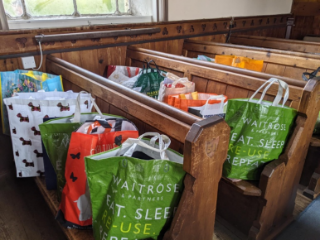
The community pantry distributes packaged food to anyone in Harston or the surrounding villages experiencing food poverty (self-referral, no voucher required). It supports about 40 families, who specify what food they like/need, and collect a pre-packed bag.
This relies on donations of food and money (eg collection box and money pot in the village shop) and people and organisations are “amazingly generous”.
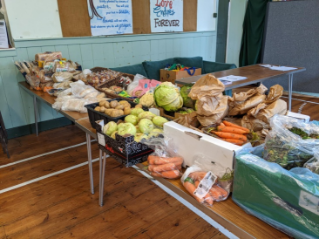
Separately, the fresh food larder exists to redistribute food surplus that would otherwise go into the green bin/landfill. Mainly fruit, veg, bread and pastries. Items can be after their “best before” (if they have one, increasingly not) but must be within their “Use by” (although volunteers often try to freeze food about to expire if it is suitable for home freezing.)
Every week about 300-550 kg food is redistributed.
CSF helped them to set up regular collections from supermarkets using the FairShare and Neighbourly apps. There is a 15-minute window to claim offered items in and then volunteers have to drive and collect, fairly long round trips late at night. They also get fresh food from Cambridge Organic and local growers and gardeners (Rachel mentioned “courgette week”!
It then needs to be sorted, processed and food stored appropriately until the following session. They have no idea in advance how much they will have. They try to avoid having anything left over. Most sessions they could give out more than they have, but if there’s a glut “we end up making soup.”
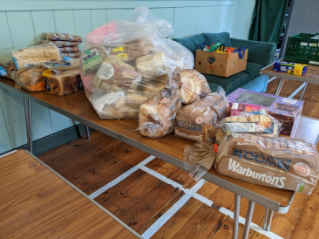
The fresh food larder is open to all, but people who don’t also need to pick up bags from the community pantry usually wait until later in the session (and often give donations.) But better not to come with a shopping list as what’s available varies a lot.
They are lucky to have the use of Harston Baptist Church, including storage, fridges and freezers. During lockdown they realised that people came for social interaction as much as for the food, so coffee mornings are run during food hub sessions. People chat in the queue and find it good to know they are not alone in experiencing food poverty.
Advertising/publicity (to supporters and people who need the Food Hub) is important – eg Facebook, village magazines.
There are over 40 volunteers, needed for many different tasks. Amazingly they are never short of volunteers. The fresh food larder takes up the most volunteer time – and space.
Sustainable Northstowe Community Pantry
Sustainable Northstowe (SN) organises many eg. seed swaps and tree planting, but the community pantry is their most successful project. It began in 2022 when it was noticed that the Co-op in Longstanton produced loads of food waste. SN approached the District Council, and were allocated a shelf in the temporary community centre which at the time was half of the new primary school.
From one volunteer collecting twice a week from one shop it grew to collections seven days a week from Willingham and Longstanton Co-ops, who give away surplus bread, fridge items and flowers after 8pm if they can’t sell them the next day.
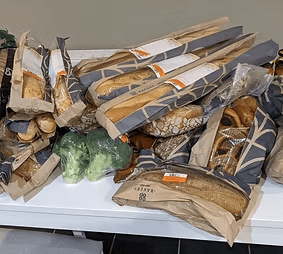
Anyone was welcome to take food from the shelf, which wasn’t manned, whenever the community centre was open. Nappies etc are also distributed, and they get a lot of cat food, but mot much dog food!
The community space in the school closed as the school grew, and SN are waiting for the new community centre to be built in which they hope to have a Community Pantry shelf and hopefully a fridge and freezer. For now, the food goes into volunteers’ fridges and they give it away directly through the Olio app. [Update April 2026: they have now reopened in the new Unity Centre.]
There are around 200 items a day – at the peak this rose to 500-1000 items a day. There are 20 – 25 volunteers, whose roles include cleaning and checking. Volunteers are managed via WhatsApp. They don’t find it difficult to get volunteers – most join through word of mouth.
When the project started it was about preventing food waste, but it became clear the food was needed. However because the goal is to avoid waste and they don’t mind who takes it, there’s no stigma about using the community pantry. Sometimes if organisers know there is a family in particular need they will put items to one side.
Both Rachel and Stefania noted that supermarkets are getting better at their orders and reducing waste, which is good but means there is less available to collect from them for people in food poverty.
NB: the Olio app can be used by anyone wanting to give away food, or collect free food – worth knowing about.

