
APOLLOW – Review of 2025
With summer and autumn now behind us, it is time to look back at the first year of A POLLinator survey of Oakington & Westwick. It has been a really terrific year; here’s a flavour of what we did.
Overall, we had 45 counts from nine counters, amounting to a very impressive 7 and a half hours of counting. Across the whole of the UK, there were 5,307 counts, which is a record for the UK Pollinator Monitoring Scheme and we have played our small part in achieving this – well done!
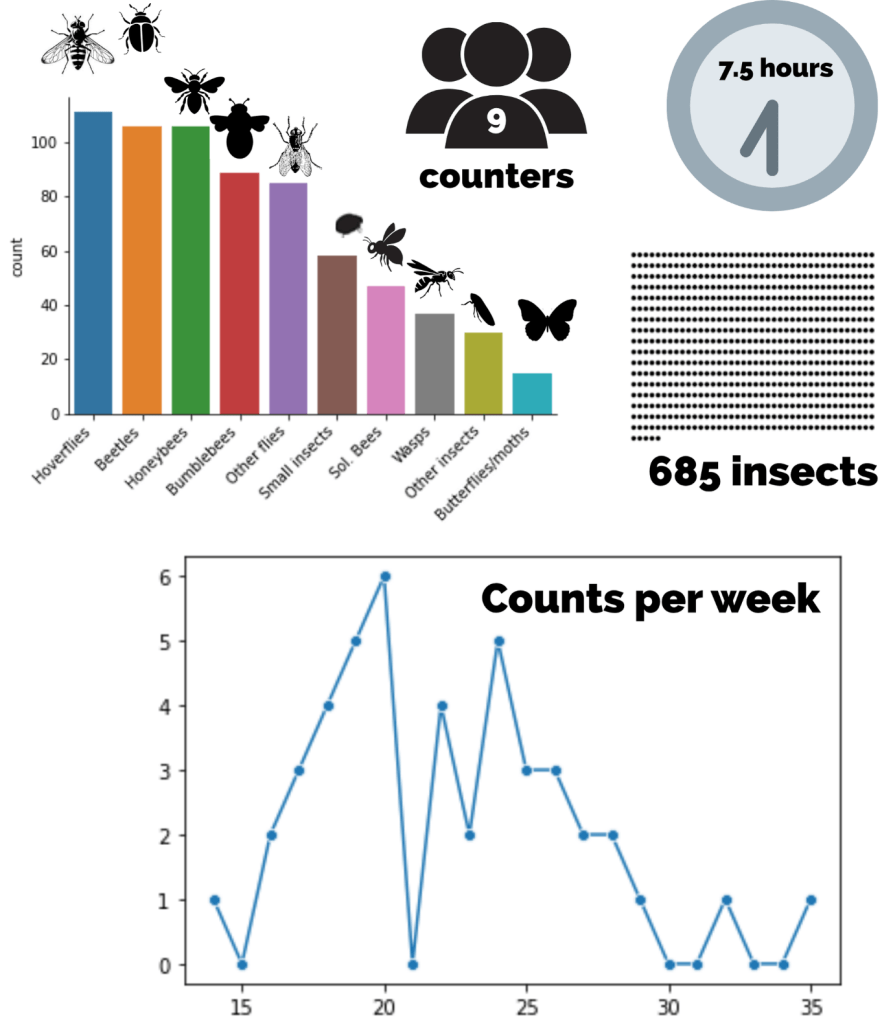
The number of records submitted per week steadily rose through April and into May. After a half-term break, momentum was regained throughout June and July but fell in August and September. I don’t know about other readers, but August was a barren time for flowers and made even finding a place to count difficult.
Hoverflies were the most counted of the 685 insects from our project, with 111, followed closely by Beetles and Honeybees (106). The single biggest count was a staggering 127 insects recorded on a quadrat of ivy in late August. This goes to show what a useful resource Ivy flowers can be in the late summer and autumn and large clumps can literally be swarming with them. At the other end of the scale, there were three zero counts. Which means we have three ‘Zero Heros’. You might think that a zero count isn’t worth submitting; far from it! A zero count is just as important as a high count. Knowing the conditions in which insects aren’t found is just as important as where they are.
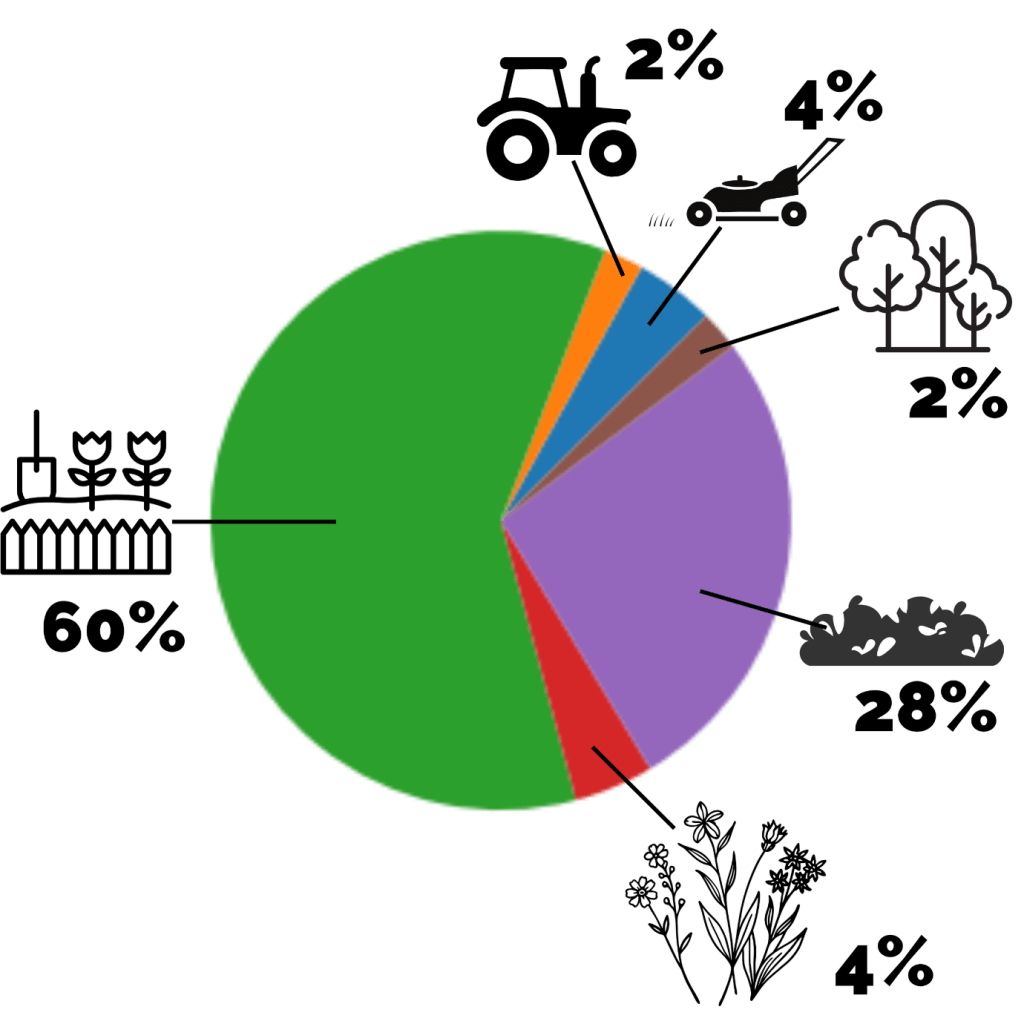
Unsurprisingly, gardens were the most popular place to count, followed by verges and hedgerows. When looking at just gardens, then it is Bumblebees and Hoverflies that are the clear winners, which is in line with patterns nationally.
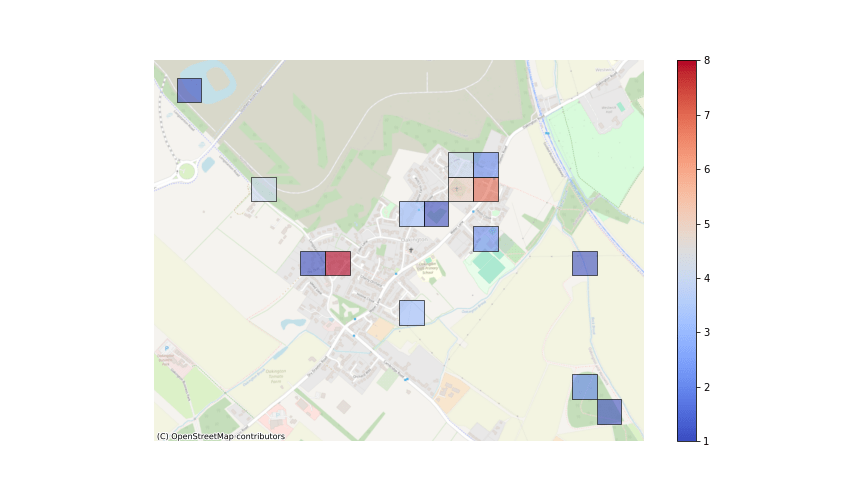
The map shows where the counts took place (within 100m grids). Mill Road and Coles Lane (where the top two counters live) show the highest counts. Next year, we’d love to get more counts in public areas and add to the 2% of counts done in the farmland margins.
So, what have we learned? It is difficult to say very much about pollinators in just one year. The benefit will be when we can start to compare year to year. But we have certainly learned something:
- We like counting in our gardens. And if we like counting in our gardens, and (one assumes) we like counting lots of insects, then why not make 2026 the year where you put some of those pollinator friendly actions into practice. A scruffy corner here, a log-pile there. With the recent verge bulb planting, we hope some of the verges will be left by the council’s mowers in 2026.
- We could definitely have more counters. 2025 has been a really good start to the project and with more counters, we will get even more information about our pollinator
- With warmer, drier summers, we can consider whether – within our own areas – we can provide resources for pollinators throughout the year.
- Signage. We want to encourage more counters to count in particular areas, so we will consider some specific measures to get people counting in those places.
For anyone who has submitted a FIT count, you will hopefully have received the newsletters from the team at UKCEH. Do look out for the 2026 Annual Report, where APOLLOW might be making a guest appearance – watch this space!
Which leaves us to say a very, very big thank you to all the participants in APOLLOW – and therefore UK Poms – in 2025 and we hope you will be back with your quadrats in 2026.
 Sustainable Oakington and Westwick