Category Archives: Uncategorized

SOW Meetings 28 June & 26 July

7.30pm at the church hall.

We’ve learned a lot over last year .. so what do you now think we should be doing as a community going forward? There will be a slot for everyone to say what they think. In June we will listen to all / each other’s views and in July debate further and try to vote/decide what we can and what we can’t do…

Starting on a Nature Recovery Plan

Joint SOW and EAG (Environment Action Group) meeting 31 May 2023. Eleven attended, numerous apologies, and lots of enthusiasm overall!

From the Nature Recovery Toolkit:

  • Medium term (10 yrs+) plan for the creation of more nature-rich habitats in the village and surrounding countryside
  • Clear outcomes – targets such as “plant 2km hedgerow” or “create hectare of wild flower meadow”
  • Monitoring and recording key species, eg bats, swifts and swallows nesting on buildings, hedgehogs in gardens
  • Ideally formally endorsed by Parish Council
  • Success depends on support of local residents and landowners so communicate widely
  • Discuss with and respect interests of landowners – can’t plan specifics without their agreement
  • Might need to do surveys to discover current state. Creating a database of photos at the start of the project will also be important, so visible progress can be recorded over time.

Steps

1. Make a simple map of wildlife habitats in your area, identifying where the most important places for nature are and why they matter

2. Based on this, decide the objectives for your nature recovery plan. What habitats do you want to improve or create and what species do you particularly want to see increase in your area?

3. Develop a nature recovery map that illustrates where you want to create new habitats and the existing habitats that can be improved.

4. Develop a timeline for habitat creation or improvement, recognising that the plan is best delivered in bitesize pieces over the ten-year period.

5. Develop a plan for maintaining and monitoring these habitats and the wildlife that lives there

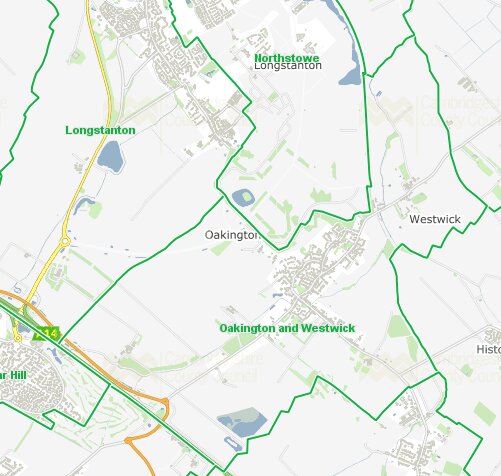
This is the area of O&W parish which we thought might be the area to target in the Plan. Note that it extends some way along the A14 including a mysterious lake, and some way north of Westwick.

Ideas about objectives/goals (varying degrees of realism!):

  • Create hedgerow along busway (between Mansell Wood and Gatehouse Road – by cycle path is easier and safer to plant but other side of busway has more room)
  • Preserve land like that by Manor Farm Close from developers – maybe by identifying badgers etc living on it, maybe by radical occupation action and claiming local ownership
  • If land is developed, ensuring wildlife corridors are included
  • Identifying garden wildlife corridors
  • No-mow for identified areas around village
  • Animal tunnels under the road, or at least signs to warn drivers of wildlife corridors
  • Village goat to graze gardens, creating better biodiversity (see “Wilding” by Isabella Tree) – also power-saving and manure-yielding
  • Make Mansell Wood a nature reserve
  • Make the Northstowe buffer areas into nature reserves
  • Add water source/store to the allotments, maybe by using large currently dry ditch there

Bits of land particularly noted or discussed:

  • Land by Manor Farm Close
  • Grassy areas withiin Arcadia Gardens and near the bus stop there
  • Gravelly patch between garage and crossways
  • Land to northeast of crossroads – was always nicely overgrown but has been recently part-cleared
  • Along airfield road
  • Behind Garden Centre (near the brick tower)
  • School grounds
  • Recreation ground
  • Stocks Green (Parish Council) and land around village sign (ditto?)
  • Village pond
  • Orchards and fruit trees around the village
  • Farmland:
    Before wandering across farmland, we must always first seek the permission of the landlord or tenant. We aim to approach all land managers in the parish with the aim of working with them.
    Some farmers in the parish are keen to encourage wildlife on their farms. These include the farmer at Mansell Farm, who is working with the Environmental Land Management Scheme (ELMS) who will secure grants for his grass margins, pollinator strips, woodland and possibly more.
    Other farmers are not farming their land at present, so it is ‘wilding’. These include farms on at west of Cambridge Road. The latter includes land which was under plastic for horticulture) and also a ‘disused’ orchard.
    Some other land is contract farmed, i.e. worked by a another farmer usually with big equipment.

Ideas on how to progress:

  • Talk to JH in the Environment Action Group
  • Need a good blank map – a large hardcopy for the Village Day at least, and electronic maps we can add to.
  • Or contact www.cperc.org.uk.
  • Map ownership of land
  • Include Northstowe buffer areas on our map
  • Use the toolkit which suggests questions for surveying different types of habitat: mature trees, woodland, water bodies/ponds, orchards, school bodies and amenity areas, waterways and rivers including ditches, grasslands / road verges with wildflowers, hedgerows, animal boxes, gardens and allotments, churches and their grounds, farmland. We made a start at divvying these between those present at the meeting but really need a map first to record findings, and some are big areas.
  • Make contact with local farmers
  • Get people to buy into rewilding ideas, don’t put people’s backs up – more people appreciate nature than are attracted by “eco” pressure
  • Find some way of making it easy for anyone in the village to record their wildlife sightings centrally for us to include
  • Work with neighbouring villages – see if they have Nature Recovery Plans (Girton has) as wildlife doesn’t know about parish boundaries!
  • Find out what’s needed for a place to be an official nature reserve
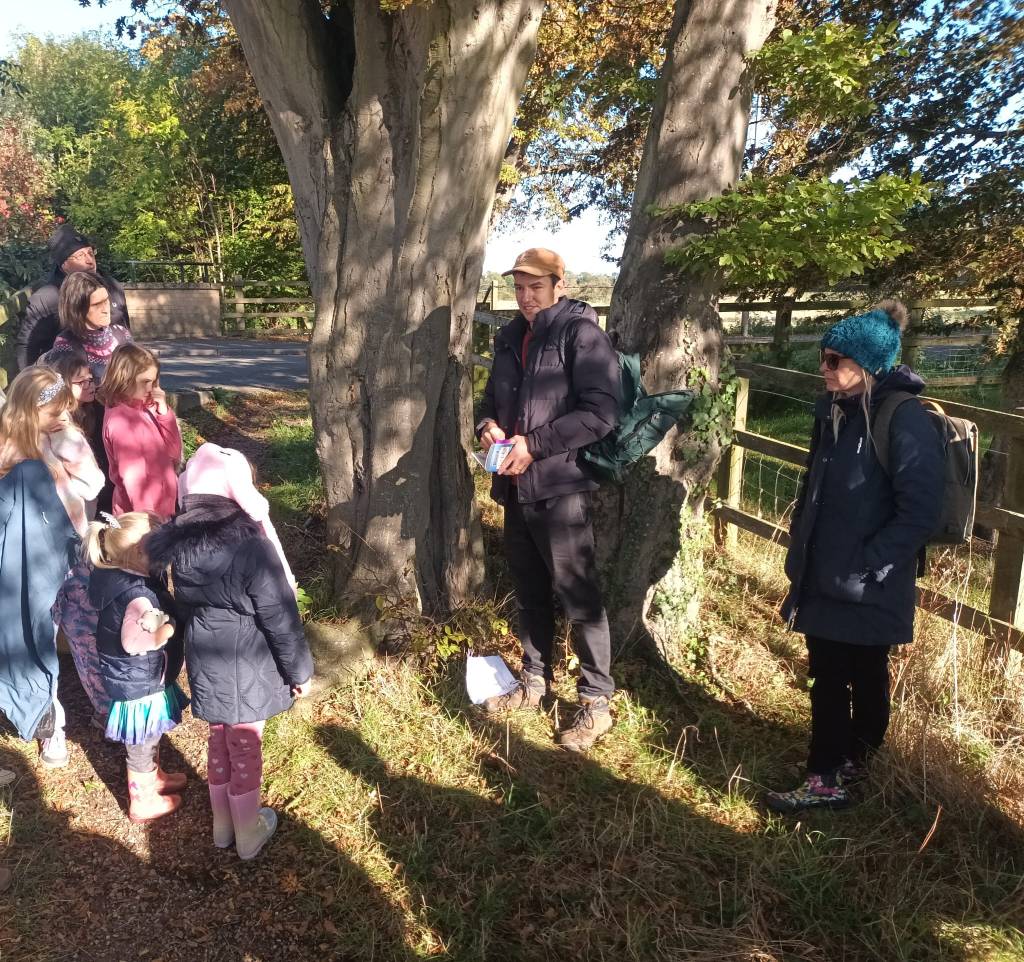
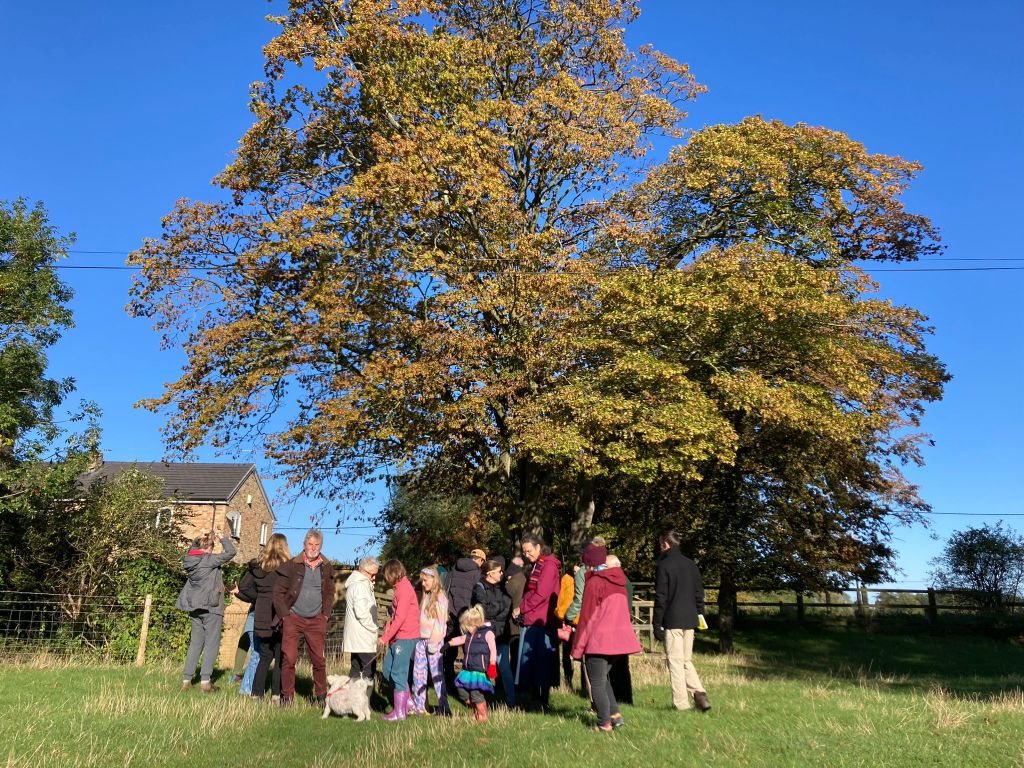
  • Do a tree walk to find, talk about and map our most precious trees
  • Offer a garden as a rewilding lab
  • Encourage people to have ponds. Capitalise on the fact that most people want to have more hedgerows, more birds (but cats are a problem)
  • We need to recruit interested people to monitor and record the presence of wildlife (plants and animals) in the parish. They don’t have to be ecologists, just keen and interested in nature.

It is easier to improve an established habitat than create a new one. So, recording the presence of wildlife is vital. We need to set up regular monitoring and recording of habitats and species so comparisons can be made year on year and with other parishes. Wildlife do not recognise parish boundaries, so cooperation with neighbouring parishes is vital for monitoring and recording.

Local records help to indicate success or failure in terms of nature recovery and are also welcomed by the Cambridgeshire and Peterborough Biological Records Centre (Cambourne) to build a county (and national) picture.

Evidence really helps to give records credibility. Night wild life camera evidence and day time photos are valuable as are records in words and numbers with dates/times.

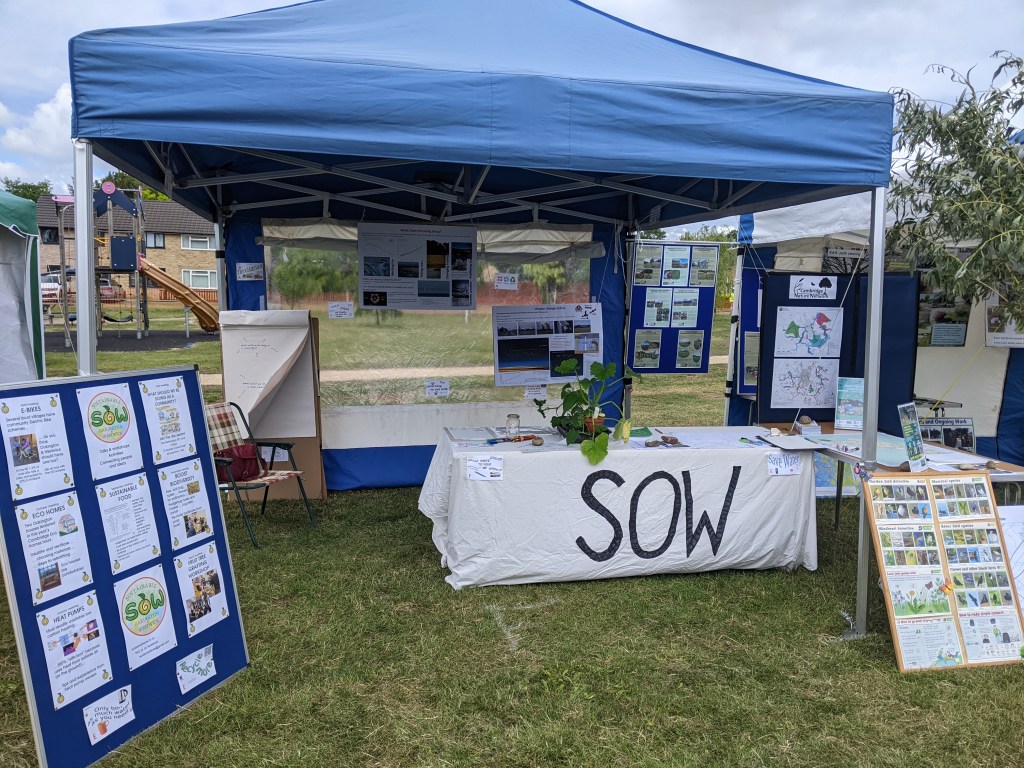
Village Day stall

Joint with EAG (although we will probably each also have information about our group’s other activities)

A big map with pins/stickers/etc so that people coming to the stall can show where they have seen wildlife in the last two years, eg hedgehogs in their gardens

Plus Cambridge Nature Network display material.

In other news…

Two members had visited Knepp of Rewilding fame.

Histon Ecofest is on Sat 10th June.

Report by Jenny Prince and John Terry

SOW meeting on 31 May: Local Nature Recovery Toolkit

Following on from March’s meeting about the Cambridge Nature Network, our May meeting, joint with the Environment Action Group, will be about starting to use the Nature Recovery Toolkit to map the existing quality of habitats in Oakington & Westwick:

  1. Make a simple map of wildlife habitats in your area.
  2. Decide the objectives for your nature recovery plan.
  3. Develop a nature recovery map that illustrates where you want to create new habitats and the existing habitats that can be improved.
  4. Develop a timeline for habitat creation or improvement.
  5. Develop a plan for maintaining and monitoring these habitats and the wildlife that lives there.

Please come along, 31 May. 7:30pm at the church hall in Oakington.

Electric bike community scheme

At the SOW meeting on 26 April, Sean Moroney, Oakington resident and co-founder of Cambridge Electric Transport, explained how the company had gone from selling e-bikes to providing them as a service to businesses and now local communities – so far, Teversham, Hardwick, Abington and Northstowe. People in these communities can use the bikes occasionally or regularly, at low cost, as a sustainable alternative to driving

Unlike “commercial” schemes like Voi, the bikes have to be returned to their shelters/lockers (so aren’t left out in the open) but you can use the bike all day, and are only charged for the riding time (at 50p an hour) not for the time it’s parked. The bikes are step-through so easy access (no crossbar), have panniers, and have 6 derailleur gears and three levels of power assist so you can choose how much exercise to get yourself. The bikes have a solar panel to charge the lock battery; the bike battery charge is good for 25-30 miles.

The bikes are insured and if you get a puncture, CET will come and fix it (and sometimes rescue stranded riders as well!)

The purchase, installation and first year’s running costs £4000 but it’s possible to apply for an SCDC Zero Carbon Communities grant. A central location would have to be found for the lockers. Because of the very low user charge, running the bikes for subsequent years costs £1200. In Teversham the Parish Council funded this.

It was suggested we canvass opinion on our Village Day stall to find out if there would be enough demand to pursue an e-bike scheme for Oakington & Westwick.

Sean also told us about their “citipod” project. “Citipods” are like four-wheeled electric bikes, with a roof but no sides, and low and narrow so they can use cycle lanes without getting in the way of other cyclists. They are building a prototype of the cargo version; versions which can carry two child or one adult passengers are also proposed. Sean may bring one to Village Day. They may be especially useful to older people who find a normal bike off-putting. In the UK 1.2% of over-60s ride a bike, compared to 23% in Holland.

Some of us had a go at riding the electric bike!

Plant swap/stall

10–12 on Saturday 13 May
2–4pm on Sunday 14 May

Outside 36 Coles Lane

Bring some plants you’ve grown and take away something planted by someone else. Even if you don’t have anything to swap, take some plants anyway – leave a donation (collection for Ukraine.)

While the main focus is on veg plants and sustainable food, we won’t turn away flowers!

Organised by OWN & SOW


NEXT SOW MEETING: Electric Bikes on 26 April

Transport accounts for a quarter of the UK’s greenhouse gas emissions. Find out how cycling and electric bikes in particular can help us live more sustainably. Sean Moroney, CEO of Cambridge Electric Transport and Oakington resident, will be talking to us. There will be an e-bike to try out too!

Wednesday 26 April, 7:30pm at the church hall.

And the usual tea, biscuits and exchange of news and views!

Sustainability – Ideas to Make a Difference

SOW members are invited to this event in Landbeach on 20 April.

There is no car park for the church, which right next to the road, and there is no car parking on the road outside the church either. So, for those coming in the car, cars need to be parked on the side of the road of the nearby streets and in the village hall carpark, if there is space.

Cambridge Nature Network

Joint SOW/EAG talk on 22/2/23 by Natalie Lambert of Cambridge Nature Network with 17 attendees.

The UK is one of the most nature deprived countries in the world and Cambridgeshire is one of its most nature deprived counties. The Cambridge Nature Network was set up in 2021 to help nature recover and improve access to it.

Clusters of natural habitat have been identified within a 10km area of Cambridge as five Priority Areas, including the chalk grassland of the Gog Magog hills, the River Cam corridor, and the south of Wicken Fen. The aim is to make these areas bigger, better and more joined up.

A further “Opportunity Area”, Fen-edge Orchards & Droves, has been identified to the north of Cambridge (light brown in the map above), and it’s this area we are in – strictly, Westwick is in it and its western boundary is the guided busway but projects in Oakington would be included. (“Opportunity” rather than “priority” because of lack of funding at the time for surveys.) This area could form a stepping stone for wildlife towards the richer nature of the Ouse valley/washes and the Great Fen further north.

Cambridge Nature Network involves farming and other landowners, local planning authorities, businesses, parishes and individuals. It has pressed for nature-supportive policies to be included in the Local Plan, encouraged nature friendly farming, and has secured funding for 25 nature recovery projects. The most local to us was organised by Histon & Impington Green Spaces and included hedge laying and habitat creation such as insect boxes and reptile refuges.

Natalie encouraged us to use the Nature Recovery Toolkit to map the existing quality of habitats in Oakington & Westwick, which can lead into a project to improve them – we could then apply for funding from Cambridge Nature Network. We have decided we will look at this toolkit in the May SOW meeting (31st May).

  1. Make a simple map of wildlife habitats in your area.
  2. Decide the objectives for your nature recovery plan.
  3. Develop a nature recovery map that illustrates where you want to create new habitats and the existing habitats that can be improved.
  4. Develop a timeline for habitat creation or improvement.
  5. Develop a plan for maintaining and monitoring these habitats and the wildlife that lives there.

There were lots of questions and discussions following the talk – here are some of the points raised:

  • What are “droves”? A fenland word for long tracks used for cattle. Many local villages have droves.
  • The fen-edge orchards and droves opportunity area is now a focus for the Cambridge Nature Network.
  • Wildlife corridors – data shows that these are crucial even if not huge. Maybe the busway verges form one.
  • Working with farmers? Cambridge Nature Network soon found that farmers did not want to be told what to do, and that it was best to work with them through a committed “lead” farmer.
  • Our village survey – rather than starting with who owns what land, the toolkit will help us work out what’s already there and what we want to achieve. If a formal project is begin the Wildlife Trust may be able to help with surveying.
  • Natalie suggested we talked to people who have done projects in John Clare County (a nature priority area by the Nene Valley.)
  • A14 trees (planted by Highways but uncared for and so mostly dead.) Would have formed not only a buffer but pockets and corridors for wildlife. Natalie encouraged us to make a project proposal. Other community groups have worked with the Highways department. eg. Histon Abbey People for biodiverse verges.
  • Biodiversity Net Gain (BNG) – Natalie said the details of this have not been finalised but it is something developers will need to consider in future.

It was suggested that EAG/SOW have a joint stall at the Village Day showing the mapping and inviting participation.

« Older Entries Recent Entries »