
The Air we share: Why indoor air quality matters for our health
Paul Kershaw, of SOW and Cambridge Retrofit Hub, gave a talk on 11th February 2026 about Indoor Air Quality. The slides are here but below are some extra notes from the talk.
The examples of the Clean Air Act 1952 and of the transformations in Beijing (factories shut down for the Olympics) and New Delhi (lockdown) show that we can achieve cleaner outside air outside, so cleaner air inside our homes ought to be achievable.
Be wary that different thermostats can record slightly different temperatures, so don’t get hung up on the exact values. The important point is not to go too low.
Most damp and mould is as a result of fuel poverty.
Humidity is an effective indication of ventilation in the home. Humidity monitors are cheaper than air quality monitors.
Any home with gas heating or cooking should have a CO (not CO2!) detector.
Recommend turning cooker hoods on 5 minutes before cooking and keep running for 5 minutes afterwards, similarly bathroom fans should be kept on for 5 minutes or more after the room has been left. Extractor fans often aren’t big enough – builders won’t have calculated how much air needs to be extracted.
Paul’s top tip was “purge ventilation“, also known as Stoßlüften (shock ventilation) or “house burping” – see the slides (slide 25) for instructions. It’s about replacing the air without taking the heat out of the house. If you live on a main road, don’t do it in rush hour, and in summer, not when it’s hottest outside.
Leaving a small window ajar all day can lead to heat loss from the building fabric. Trickle vents in windows were introduced because people don’t tend to do purge ventilation any more. At night they can be useful if you can’t sleep with the bedroom door open. If you wake with a headache it could be due to too much CO2 in the room from lack of ventilation.
Wood burning stoves are now the leading source of PM2.5 pollution, causing more than vehicles. The occasional log fire is OK but they are not healthy, and woodburners will soon be sold with a health warning.
Paul recommended opening windows when using cleaning products, and swapping harsh chemical cleaners for less harsh eg descaling a kettle with white vinegar, or using vinegar and newspaper to clean windows, as a way to reduce polluting your indoor air.
We have a lot more moisture in our houses now than in previous generations. We wash and bathe a lot more than people used to so old houses that were OK in the past now get damp. Drying clothes on radiators is not good, better is on a clothes horse in a room with an extractor fan.
Mechanical ventilation with heat recovery is the gold standard for ventilating houses, but it’s expensive/disruptive to retrofit. They can be up to 90% effective at retaining heat.
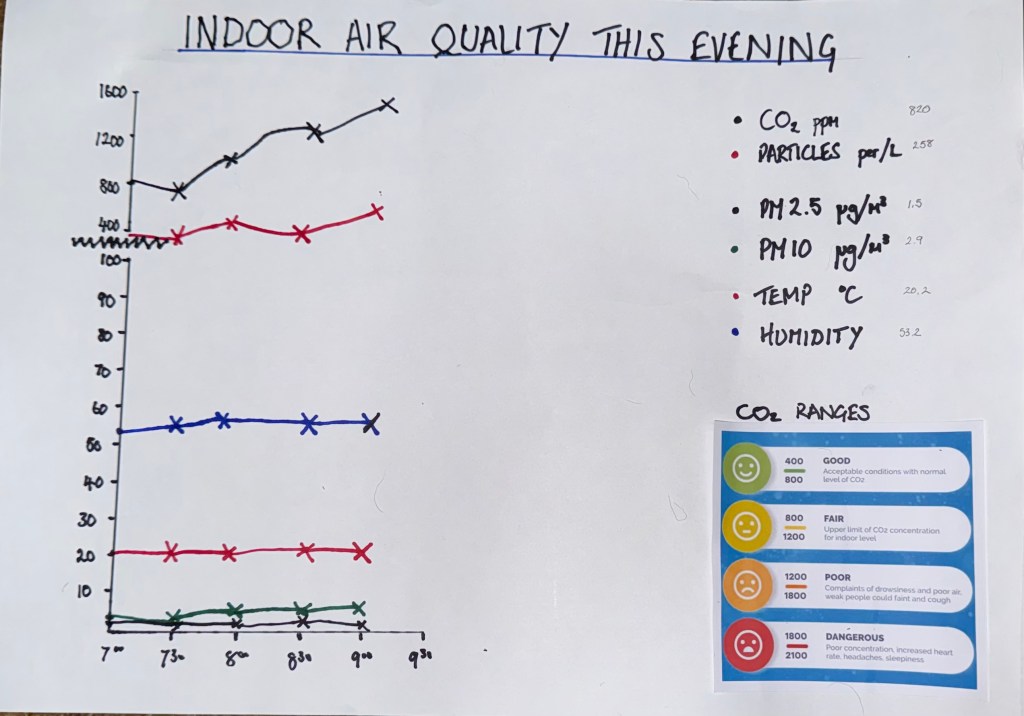
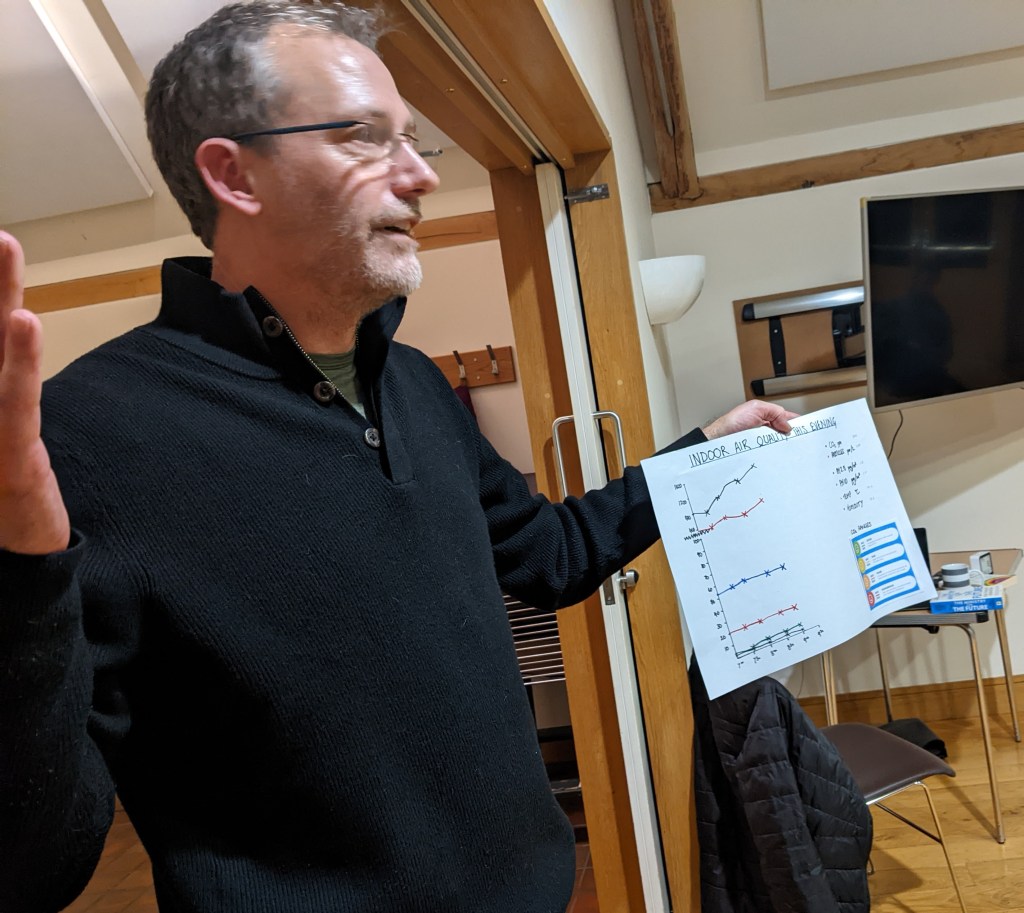
During the course of the talk we recorded the effect of ten people sitting in the church hall together, with CO2 levels reaching a ‘poor’ level.
 Sustainable Oakington and Westwick
Pingback: Next SOW meeting and other news | Sustainable Oakington and Westwick