
Bees and Beekeeping
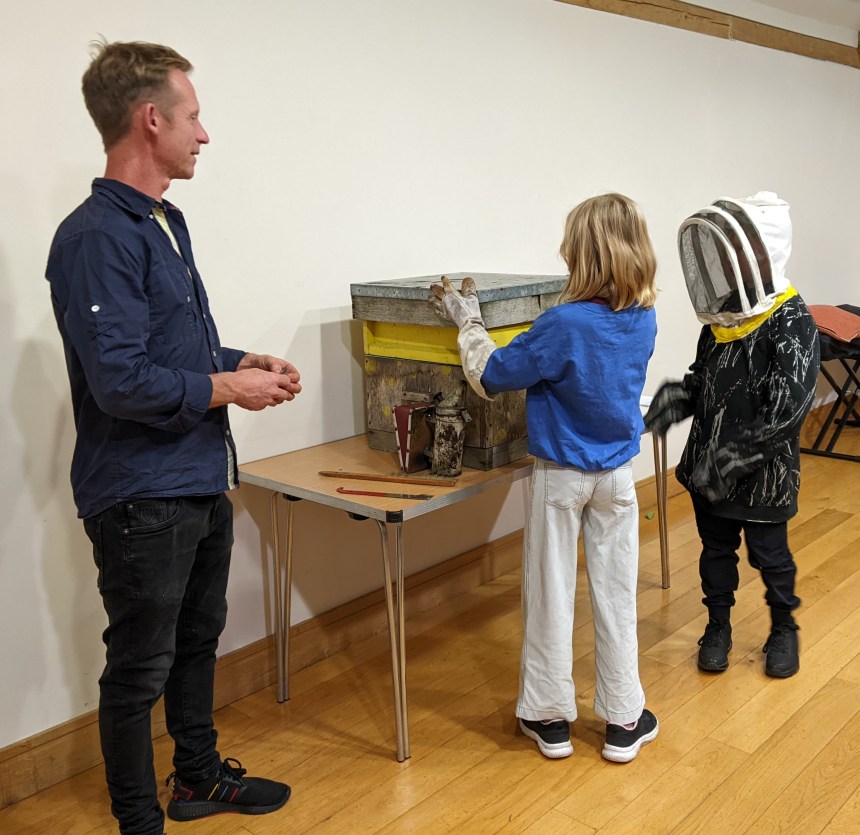
Just a few highlights from Leo’s fascinating talk which prompted lots of questions!
Beekeeping is a symbiotic relationship – you get honey but the bees are also helped.
In summer there can be 60,000 bees in the hive – most bees die off in autumn so in winter it’s just a cluster the size of a fist. A hive includes a brood box covered by a queen excluder and then a honey box with another one or two added through the summer. Apart from the hive other equipment needed includes a veil and gloves, a queen trap, and a smoker. You don’t need much.
In a natural environment there are two honey flows, one at blossom time and one just after midsummer. With garden flowers all year the honey flow is more continuous. You might get 15kg honey in spring, 60kg over summer. You take it at the end of August so the bees have enough time to build up honey to overwinter. Sometimes wasps get in and steal all the honey first.
Grubs are fed on pollen (high protein), then pupate, and then the young bees move onto honey. Worker bees have different jobs throughout their lives. First they act as nurses, looking after the grubs; then as guards, then as foragers. Bees forage for four things: pollen, nectar, water, and propolis – bee glue – eg. from tree buds.
Drones don’t seem to do much – but perhaps there’s more going on than we think? Once a summer they join drones from other hives in a drone congregation zone to which the queens fly off to mate.
The queen lays eggs constantly for 2-3 years – 100,000 eggs from that one mating flight. The old queen must fly off (swarming) before the new queen hatches. This year Leo has been experimenting with encouraging the swarms into nearby boxes.
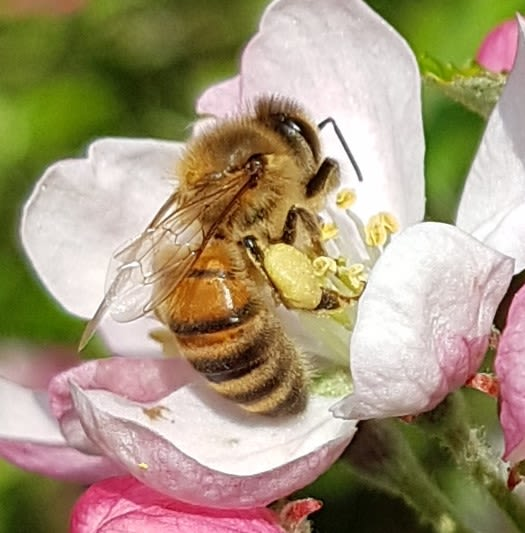
The native honeybee is small and black and only found in remote places like the Hebrides. All the honeybees you see are hybridised with striped Italian bees brought here in the 50s because they had a gentler nature and were more productive. So they are effectively domesticated.
You can help honeybees by planting flowers and flowering shrubs and trees. Bumblebees and solitary bees don’t have humans helping them so to help them it’s even more important to provide habitat to live in.
There are 24 different types of bumblebees; some look very similar. Only the queen survives the winter so these are the first you see in spring. They like old mouseholes to live in, but also grassy tussocks. Bits of turf stacked up somewhere sunny are useful to them. Bumblebee nests bought online are no use. Bumblebees also make honey but unlike honeybees don’t die if they sting.
There are lots of species of solitary bees. They don’t feed their grubs. Ivy bees are emerging aruond now – have a very short lifecycle. Sawn-up bamboo is very useful to them and they use such “hotel;s” all year round.
 Sustainable Oakington and Westwick