
Boost Biodiversity
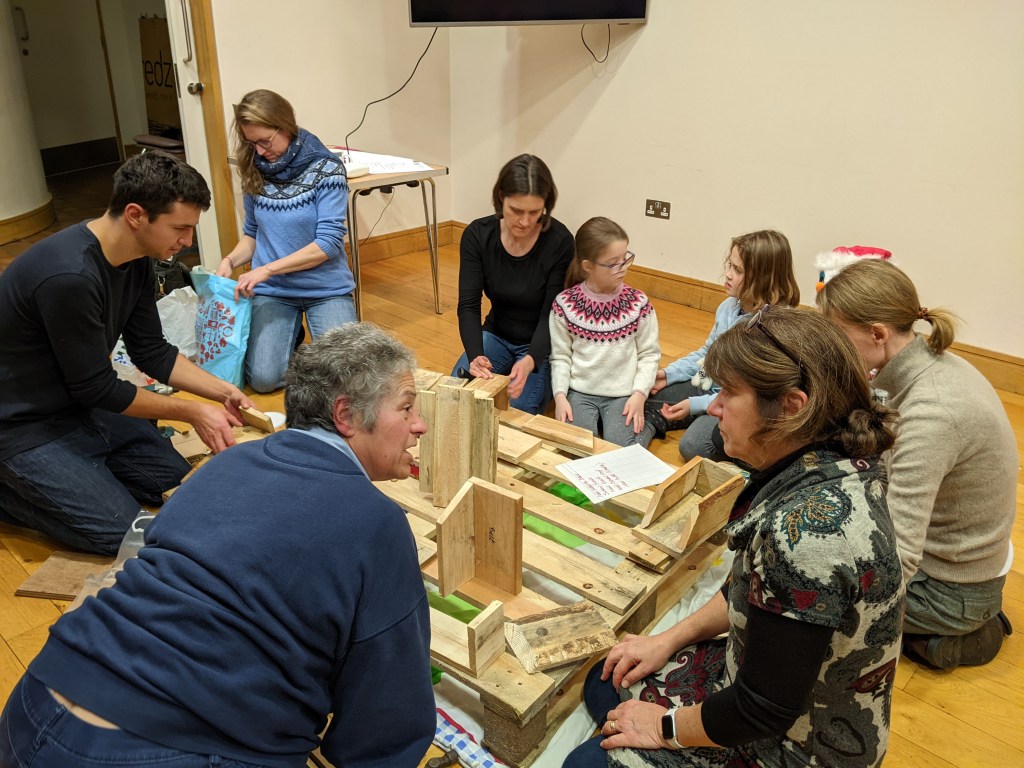
Boost Biodiversity, with or without the kids!
Kate began by showing us the introduction from Dave Goulson’s book, “Silent Earth” (full talk available on YouTube and book on Audible.)
In the UK, we have lost 97% of our flower-rich grassland over the last 100 years, mostly due to monoculture farming, and with pesticides in the mix, insects are in serious decline. Being at the bottom of the food chain, we need to help EVERYTHING connected to insects to mitigate collapsing populations of wildlife.
Here are some simple ideas, most of which are nice little projects that you could do with children (or not!):
Flowers
The debate about native vs non-native persists… just be aware of what you buy to plant. In particular, a huge proportion of plants in garden centres that claim to be bee friendly, are actually laced with pesticides! D Goulson recommends seeds from Emorsgate. As a group we may be buying some in bulk to save £. More to follow on that.
Butterflies
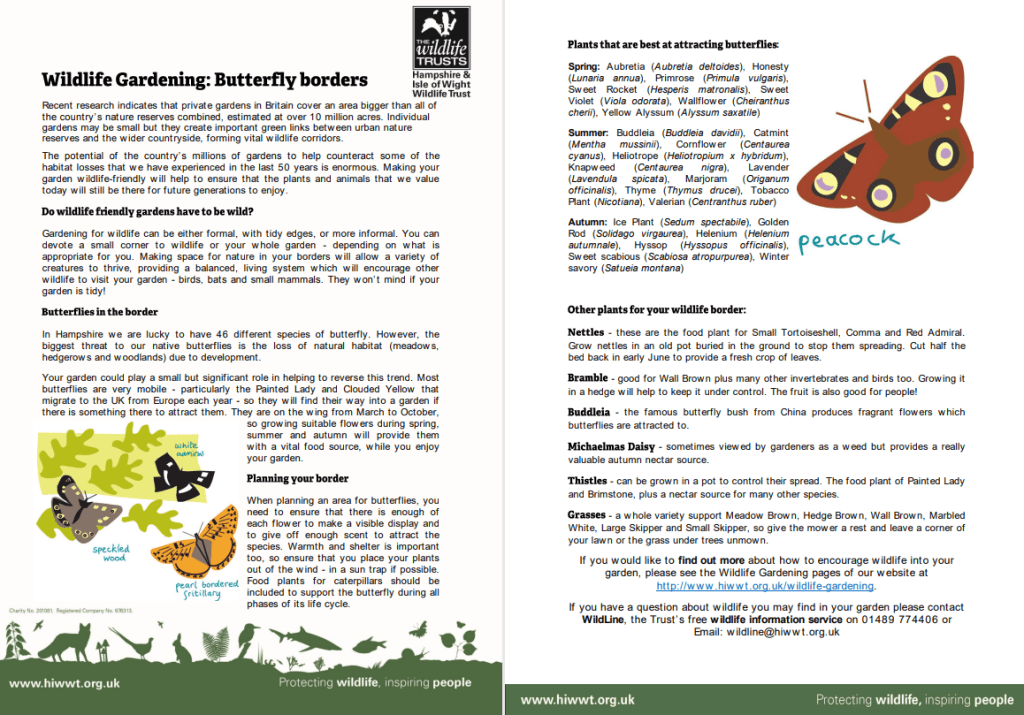
They were scarce this summer  . Here’s a list of what to plant to encourage butterflies.
Bug Hotels
There are LOT of ideas online and kids can get really creative with these. (I have an old bookcase I my garden stuffed with bug-friendly things!) Put them in a damp, shady spot.
Bee Hotel
Drilling holes into a log is simple! 2-10mm wide, 2cm apart, 7-15cm deep. Place it in the sun, keep it dry and at eye-level. Using natural stems is nice too – see the Wildlife Trusts website.
Stag Beetles
These beauties are endangered. Build them a simple log pile! See People’s Trust for Endangered Species page or this video.
Hedgehogs
Can roam up to 2km a night! Put a hole in your fence 13 x 13cm. Make (or buy) a house for them out of solid material, not sticks/willow (they can get stuck in those).
Wildlife in/around rivers
If you are swimming, use reef-safe suncream. Avoid putting pollutants in water that kill fish and other wildlife – use eco washing liquid etc.
Flea treatments for dogs (and cats) are a neonicotinoid insecticide – 1 dose kills 60,000,000 honey bees! – avoid prophylactic treatment and waterways after treatment.
Ponds
Where there’s water, there’s life! Even a tiny pond will bring wildlife to you. (I think this needs to be another talk on it’s own… )
Amphibians/reptiles
How to build a hibernaculum.
Put water out when it’s dry/defrost when frozen
This can be a life-saver. A shallow dish with pebbles in is also great for insects.
Invasive species
They should be controlled (and they taste good!) Grey squirrel, muntjac deer, signal crayfish (we have LOTS of these in the brook  ), for example, are all damaging to native wildlife.
Birds
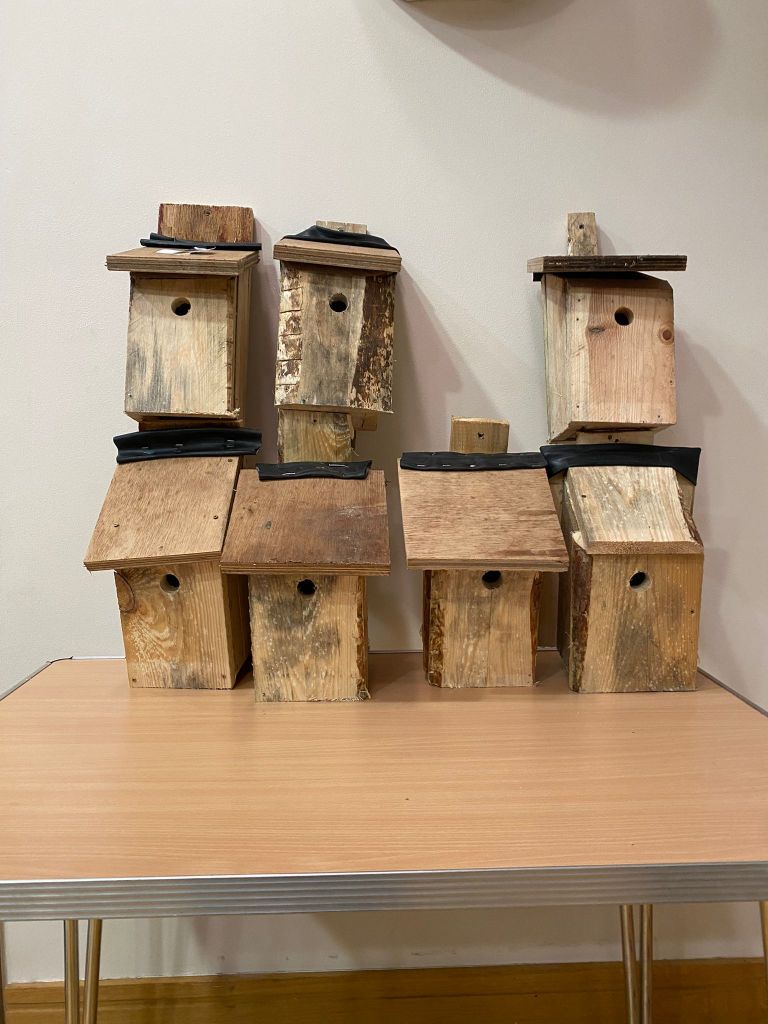
Feed them and give them somewhere to live!
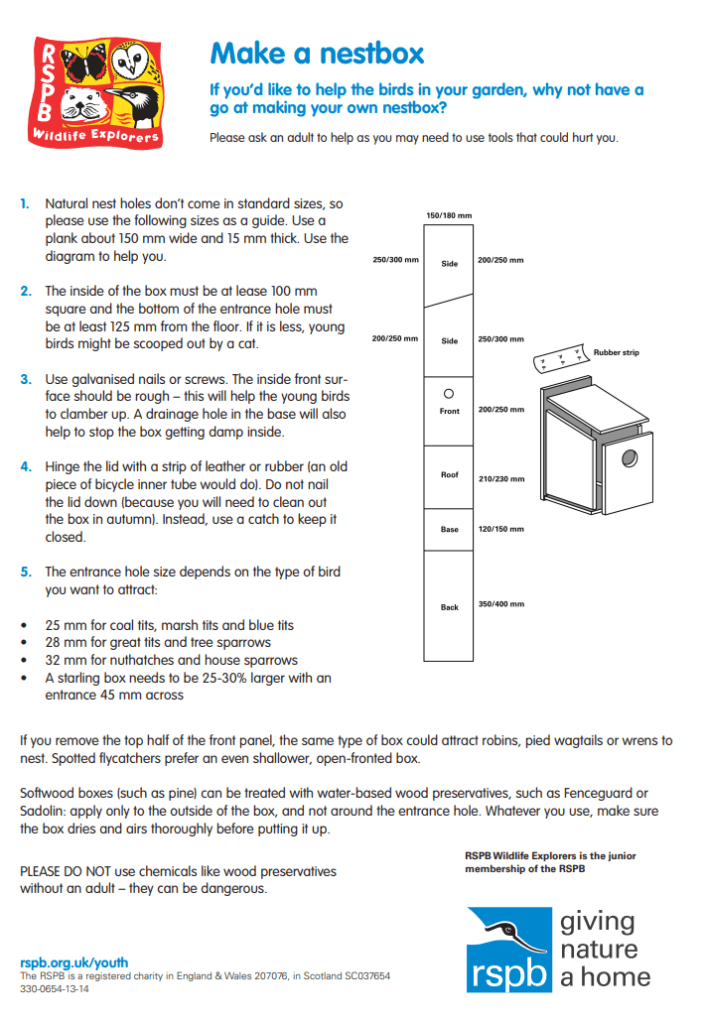
There are countless templates online for boxes, so lots of fun can be had with that. Put your box about 2m high, facing N or E. More information on the BTO site.
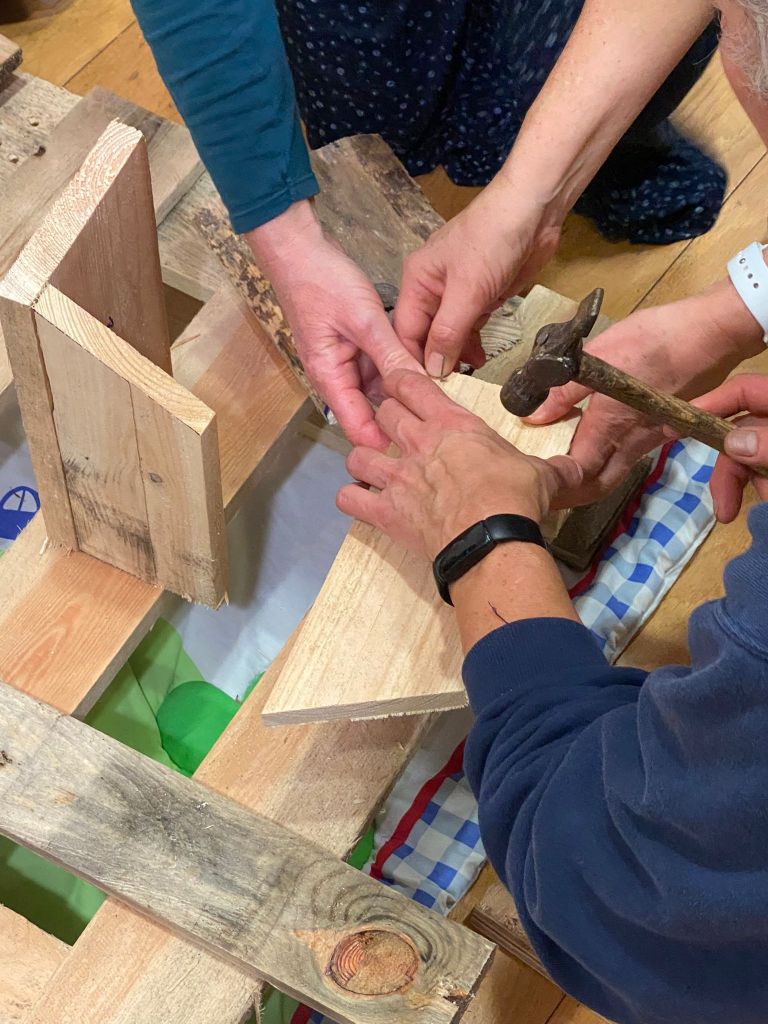
We had fun making some in the session, re-using pallet wood (pre-cut by Kate!)
 Sustainable Oakington and Westwick