
Sustainable Food Talk
Talk by Ann Mitchell of Cambridge Sustainable Food on 28th September 2022
Key messages: our choices make a difference, and so does asking sellers about food.
Food’s environmental sustainability fits in the broader picture of health and fairness, and includes: carbon footprint, land use (& biodiversity), soil (1/3 of our arable land is degraded), animal welfare and working conditions.
We import at least 50% of our food. Food waste – up to 30% of the food produced globally is wasted. A lot of waste caused because we expect well-stocked supermarkets. The world does produce enough to feeds its population but it’s not fairly distributed. 8.8% of UK households suffered food insecurity (Jan 22). Obesity in the UK has doubled in the last 20 years.
Impact of our food choices. Not straightforward. Ann used the example of plant-based milk. 1 pint of cow’s milk results in 1.9kg of greenhouse gas emissions, plus concerns about animal welfare in the huge dairy industry. 1 pint soya milk causes 0.5kg, 1 pint oatmilk 0.5kg, 1 pint almond milk only 0.3kg, BUT almonds have become a huge monoculture in California, using precious water resources and requiring imported bees. Soya milk concerns are that the soya is grown in Europe, not on land cleared from rainforest. Oatmilk sludge can be eaten by local pigs but is instead sent to an anaerobic digester to keep the oatmilk completely vegan.
Lots of variation in carbon footprint. A lot of land is used to grow animal feed. Beef reared in the UK has a lower carbon footprint than some beef reared elsewhere, because mainly grass fed.
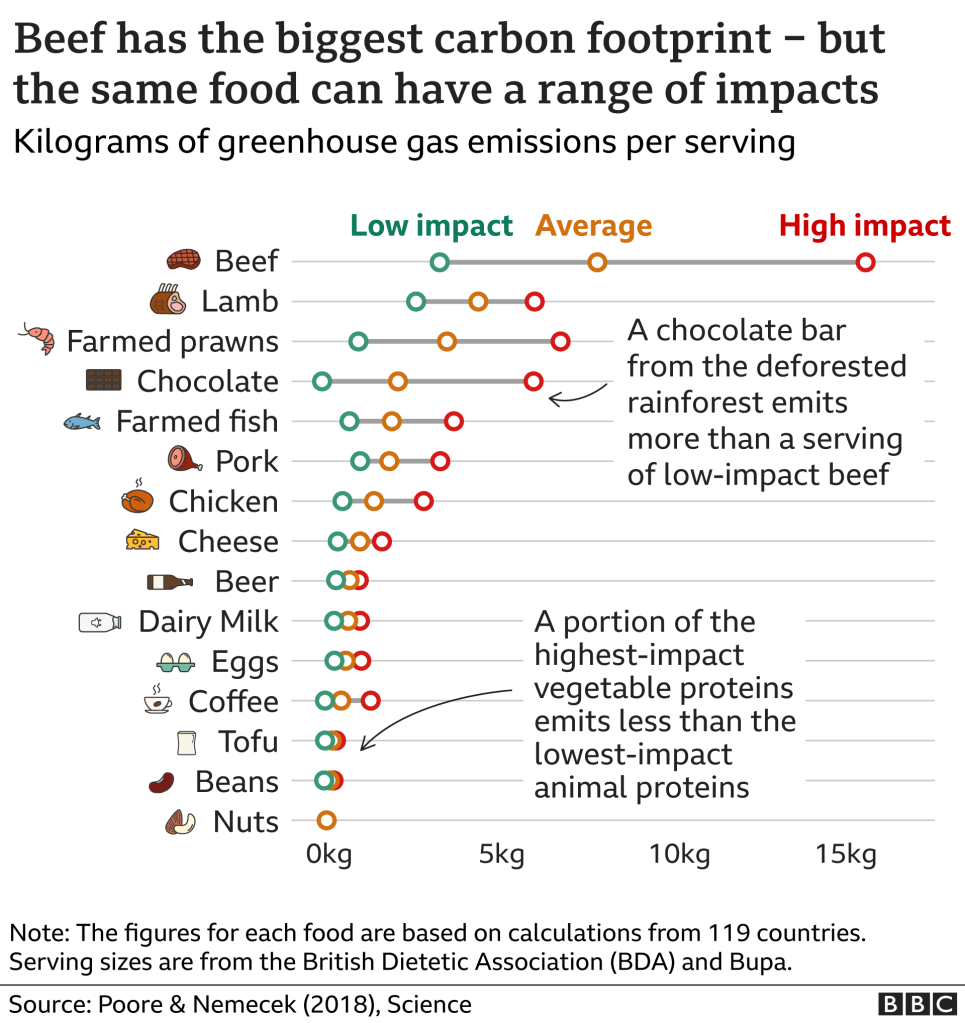
Where to get protein from? Lab grown meat is coming but not commercially viable yet. Mealworms are a low-impact source of protein and can supplement the diet of animals including in pet food. Wild meat (venison, rabbit, muntjac) from animals that have to be culled anyway (because we don’t have top predators roaming about) is another option. Ann brought examples of vegan alternatives: tinned beans (no soaking required), dried lentils and split peas of various types (ditto) – Hodmedod is a Suffolk grower of dried beans and peas; mushroom also contains protein and chopped up resembles mince; brocolli. Meat intake can be reduced by mixing minced meat and one of these alternatives in dishes like bolognese, shepherd’s pie.
Miscellaneous: British tomatoes in March/April (hothouse-grown) are at least as bad as green beans flown in from Ethiopia. Rice grown in paddy fields has a high carbon footprint, wild rice eg from Italy grown differently is better.
Tips for a Sustainable Diet
- Eat less, but better, meat and dairy
- Choose seasonal and local
- Avoid air freighted goods (shipped is much more sustainable)
- Eat everything you buy (use judgement, not best before dates)
- Cook from scratch BUT
- Be aware of the carbon cost of cooking! (Eg put lids on pans)
- Finally – demand to know where your food comes from and make your views known. Consumer power! (Eg speak to manager, tweet larger companies)
Recommendations: “Food and Climate Change without the Hot Air” by S.L. Bridle – free to download. Updated edition of “How Bad are Bananas” by Mile Berners-Lee. For website recommendations see below.
There will be a climate diet festival in Cambridge 15-22 October: Festival programme — Cambridge Sustainable Food
Useful web site links to find out more
Feeding Britain | Sustainable Food Trust
The most damaging farm products? Organic, pasture-fed beef and lamb | Food | The Guardian
Climate change: Do I need to stop eating meat? – BBC News
The simple formula to cut your diet’s carbon footprint – BBC Food
Useful web sites for tips, suggestions and recipes
Veganuary 2023 | Home | The Go Vegan 31 Day Challenge
 Sustainable Oakington and Westwick